



This is from our April 19 letter
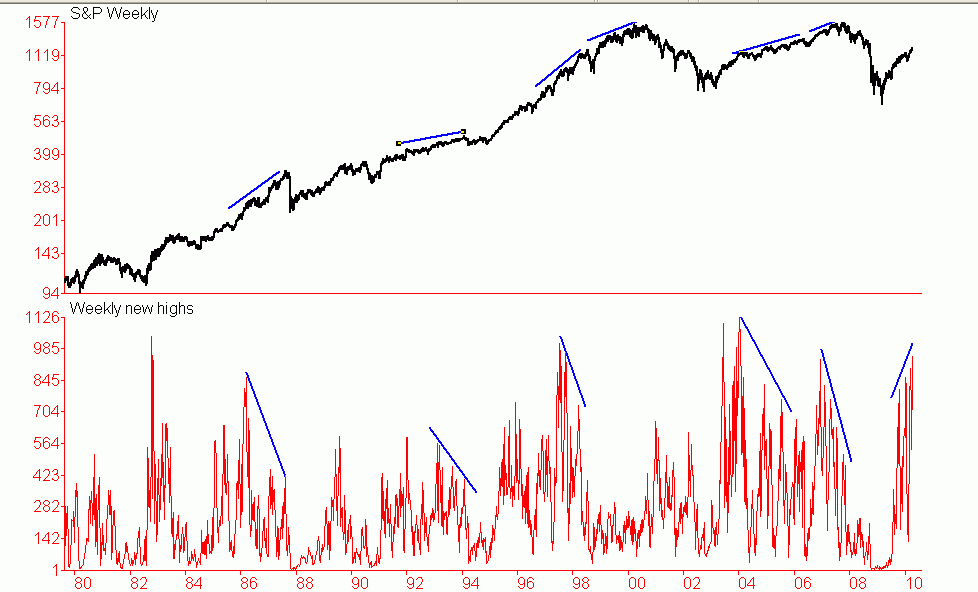
Friday's sharp decline has left a mixed picture for the short-term.. The biggest negative we see is sentiment and the biggest negative we see in sentiment is the put to call ratios. Earlier in this report we showed the 10-day moving average of the CBOE$ put to call ratio which has moved back to levels seen at or near short-term tops. The CBOE equity ratio is even more negative as it has reached levels not seen in over eight years. Some of the polls have also slipped with one important survey moving back to where it stood in late December/early January. This is also the case with our sentiment combo which combines Investors intelligence, the American Association of Individual Investors, Market Vane and Consensus Inc into one measure. As can be seen on the chart below, this indicator is close to where it stood in mid January. However, what we think is more important is the fact that the indicator remains well below where it stood in the early stages of the 2002-2007 bull market. Nonetheless, it is at levels that support the potential for a more serious short-term correction.
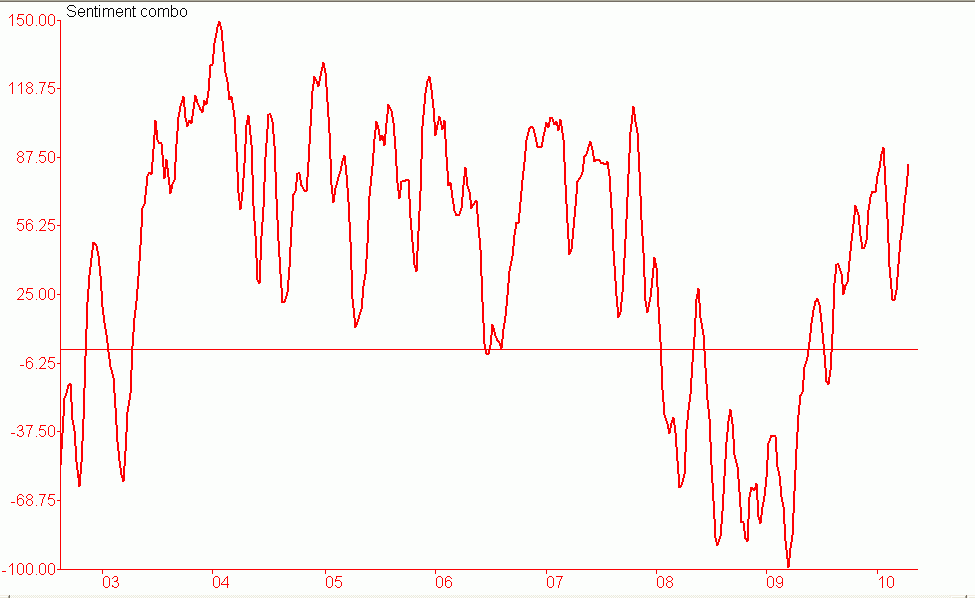
The momentum picture is a little mixed. We do have some weakness in external indicators, indicators based on breadth and volume. The McClellan oscillator is one that falls into this category. It has been acting poorly the last couple of week and late last week it moved below the late March low after falling way short of its mid March peak. In other words this indicator left a big divergence in place while also making a lower low. This is the only one of our four primary external momentum indicators to trace out such a pattern but it is also one of the more important indicators that we follow. The good news is that this is occurring still with very little price damage in relation to where price was at the early to mid March momentum peak. While we do have some divergences in place on some indicators some important measures of internal momentum (indicators derived from price) confirmed the new highs late last week while also reaching levels that are consistent with higher prices. The one indicator that stands out is the 13-day RSI. Not only did it confirm but it did so from levels that almost always lead to several more weeks if not months of rally. Last week we saw the highest reading from this indicator since October 2006. This does not mean that we can not have a short-term decline, we certainly did following the peak in October of 2006. But as we can see on the chart below the corrections were modest and we had multiple divergences before we had a serious decline that began four months after the peak in the indicator.
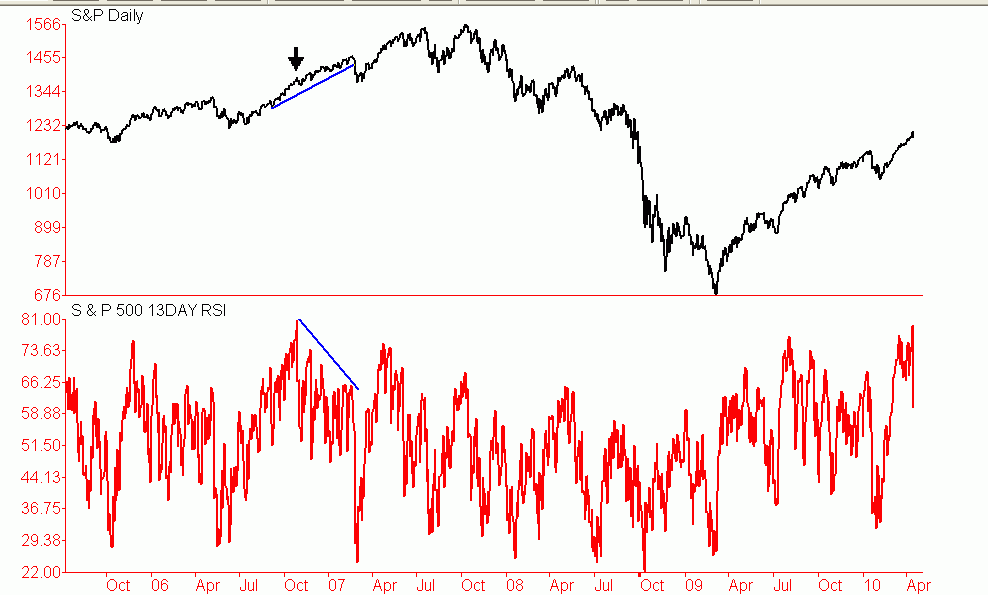
From a medium-term perspective nearly all of our indicators remain firmly in the bullish camp. Measures of participation remain strong. The daily and weekly A/D lines are at new highs not only on the NYSE but also for the S&P and even the DJIA. In looking over the data for the past 80 or so years there has only been one time where we had a significant decline (15% or more) without a breadth divergence and that was in 1976-1978. every other important top has been preceded by a breadth divergence. Some have been as short as a few months while others have lasted a year or more. As discussed earlier, the daily new highs hit a fresh post 2009 peak only last week. Historically peaks in price have not occurred commensurate with a peak in the new highs. In other words a divergence or three tends to follow the ultimate peak in the number of new highs. These can be as short as a few Months or drag on for years as we saw from 2004 to 2007. The number of weekly new highs also confirmed last week and as we have on the daily new highs we have a series of higher highs on the weekly new highs. The chart below shows the S&P and the weekly new highs as far back as 1982. As we can see, peaks in the weekly new highs occur well before an important peak in the S&P. What we do not know at this time is whether or not we have seen the ultimate peak in the number of new highs.
We are seeing a minor divergence in the percentage of stocks above their 200-day moving average and even from the NYSE bullish percent index. However, these divergences are far from being confirmed. Moreover, the secondary high seen late last week was at levels that historically lead to higher prices for several weeks to months. The same is true of the bullish percent index which measures the percent of stocks that are on a point and figure buy signal We recommend you visit www.stockcharts.com for information on the point and figure technique). We showed earlier the daily RSI and its positive implications for the medium-term. We also have the same indication from the 13-week RSI. Again, this does not preclude a short-term correction. Indeed the deep overbought condition suggests that this is a good possibility. But more importantly the deep overbought condition is consistent with strength and not the beginning of any serious decline
As weak as some indicators are short-term we also saw some signs of a short-term capitulation on Friday. This includes the big spike in volume. Some of that volume may have been directly related to Friday's expiration but it still had a climactic look to it. Friday also had a very high one day Arms index reading over 3.00. As we discussed earlier in this report, big one day readings in the Arms index have occurred at or near short-term lows. in addition, some of our short-term indicators are oversold and at levels that support some sort of a rally or at least a decent bounce Whether this bounce leads to a continuation of the rally from February or is only a counter trend affair is difficult to say at this time. However, given the strong position of the majority of our medium and long-term indicators we want to give the benefit of the doubt to the bullish case short-term until proven wrong. It will not take much to prove it wrong as a move below Friday's low would confirm the rally from early February as a completed Elliott Wave pattern on the weekly chart and also break below a short-term trend line from mid March and early April.
Go to www.marketsummaryandforecast.com to sign up for a free two week trial to all of our services


