



This is from our letter of May 17, 2010
The decline the past few weeks did carry a little deeper than we had thought it might but it has served to correct a lot of the excess that had built up during the February-April rally. Some indicators such as the put to call ratio (CBOE) have moved from bearish to bullish in a near record time (see chart in the sentiment section of this report). The standard surveys such as Investors intelligence are beginning to work off some of their excesses but still have some work ahead of them. However, the most important area that we have seen improvement in regards to sentiment is not form the standard surveys but in the stories and interviews in the financial press and news. The decline the last few weeks has brought out a lot of fear and more so a lot of comments that the bear market has resumed. This is exactly what we expect to see in the middle of a long-term bull market. Remember bull markets climb a "wall of worry". More importantly, bull markets do not end on bad news. The first wave down in new bear markets occur on good news as do tops of bull markets. Not once in the history of the stock market have we had a bull market top on bad news or a bear market bottom on good news. All you have to do is take a look at the news environment in October 2007 at the top and March 2009 at the bottom.
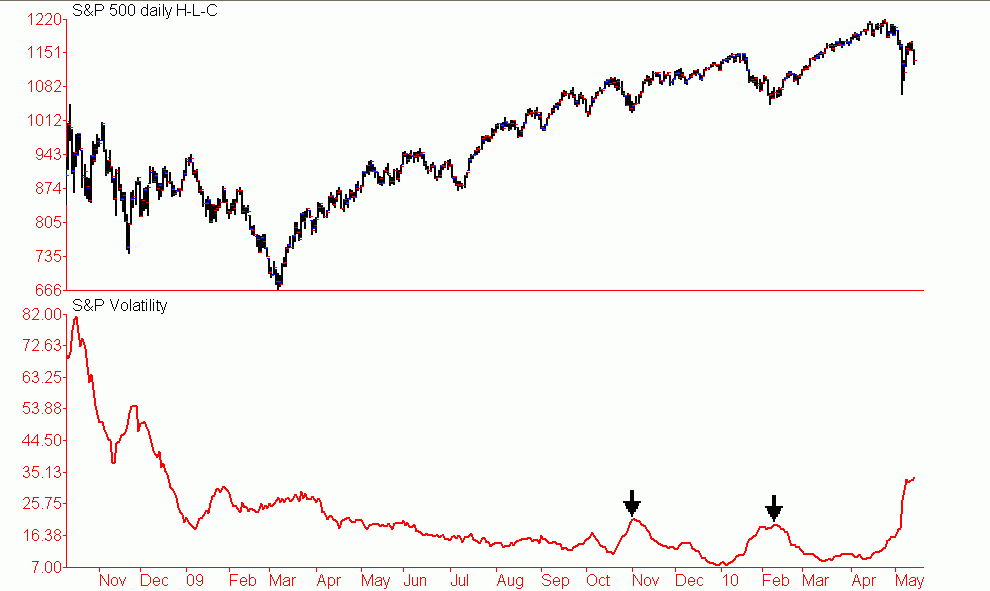
We do not work much the VIX. Frankly we do not understand how it is constructed. What we do have is a volatility indicator constructed from the price of the S&P itself. While we can not divulge how the indicator is derived completely as it was developed by a friend, we can say that part of the construction is based on the intra day range of the S&P. The basic interpretation of these types of indicators are high levels are signs of fear while very low levels are signs of complacency. This indicator is now at its highest level since November 2008. It is well above where it stood in late October of 2009 and February and this is in spite of the fact that the S&P is still above its February low. Yes it is quite true that it was considerably higher in November of 2008 but that occurred thirteen months into a bear market not a couple of weeks off a thirteen month high.
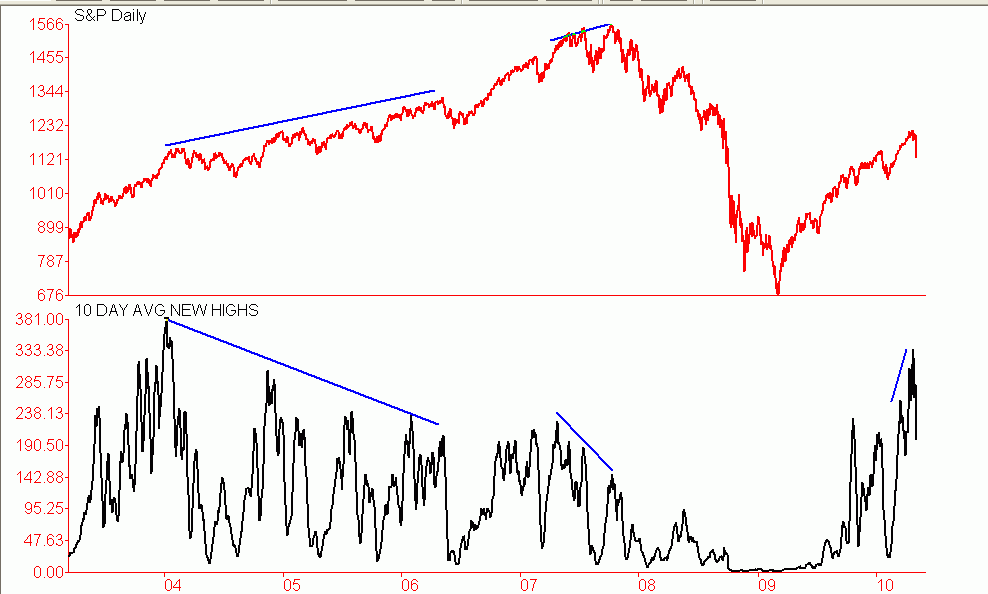
This indicator is consistent with what we are seeing in the put to call ratios and the very quick shift to a preponderance of bearish comments in the financial press. This is strong evidence that this decline is not the beginning of the next leg down in the post 2007 bear market but instead a correction within a far form complete long-term bull market. If this is not enough evidence then ask yourself this question. When was the last time a bear market got underway with both the A/D line and the new highs confirming at the price peak? The answer for the latter is never. The breadth answer is once in 1976. These are not the kind of adds we like to bet against. The chart below is the 10-day moving average of the new highs going back to 2003.
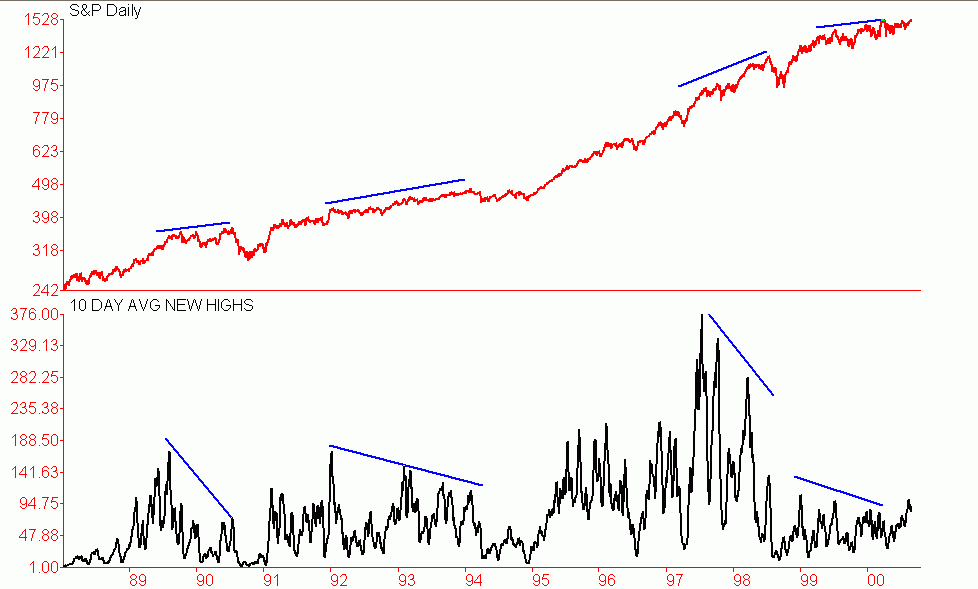
Although some of the historical divergences did not carry on for as long as the 2004-2007 divergence did every important top in price was accompanied by a notable divergence in the new highs The chart below is a look at the new highs and the S&P from 1988 to 2000 and it shows the same pattern as we saw in the last Seven or eight years and the pattern that has repeated itself throughout market history. Can it be different this time? Yes but we would not bet on it.
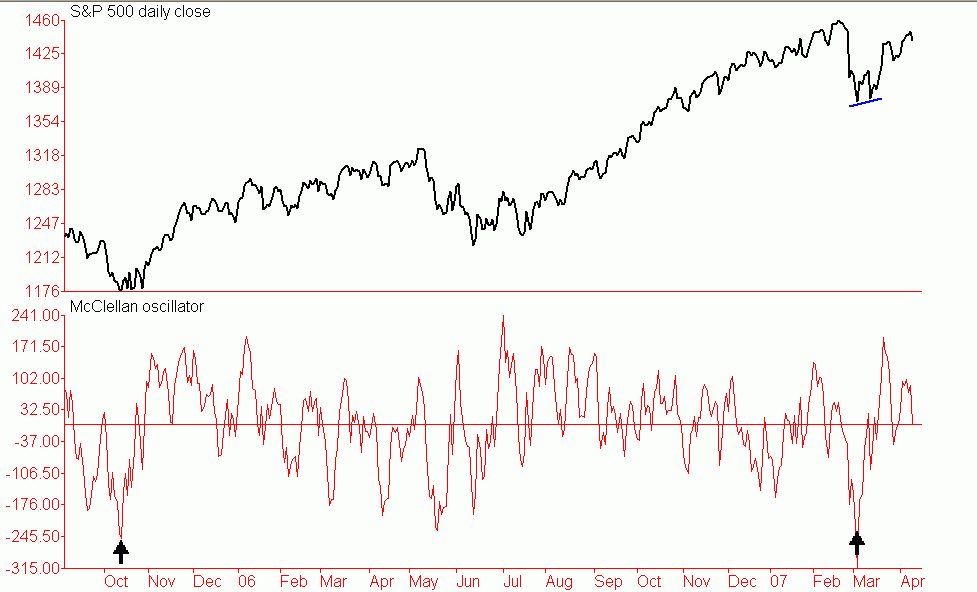
The low on May 6 produced an extreme oversold condition on a number of indicators including both of the McClellan oscillators, our own breadth and volume oscillators, the Arms (trin) index and others such as 13-day RSI. The extent of the rally early last week was due in part to the extreme oversold condition at the May 6-7 low. The level of oversold that was reached almost never marks a price low. Historically readings this extreme have almost always required one of not more lower lows in price with a higher low in the indicators. In other words we need at least one if not more divergences. This does not require a lower print low but only a lower closing low. The simple reason for this is that other than the new highs and lows, which are calculated using intra day prices, the other indicators are calculated using closing prices. Thus the old adage of comparing apples to apples comes to mind. It is rare to see a price low occur commensurate with such extreme oversold conditions such as we saw on May 6-7. This is true even within the confines of a longer-term bull market. It does happen we saw this in October 2005 and March 2007 when the price low and the McClellan oscillator low occurred concurrently. But this is the exception not the rule. Moreover, on both cases we did have a very deep test and in 2005 we had several. This can be seen on the chart below.
Short-term the market looks to be in the process of testing the early May lows. We are expecting this to lead to a slightly lower closing low, which coincidently would take the S&P into the range of the 61.8% retracement of the May 6-13 rally. We see this as a necessary part of a bottoming process that when complete should lead a resumption of the post March 2009 bull market.
Go to www.marketsdummaryandforecast.com to sign up for a free two week trial to all of our services


