

A news anchor asked a lady on the street about the weather.
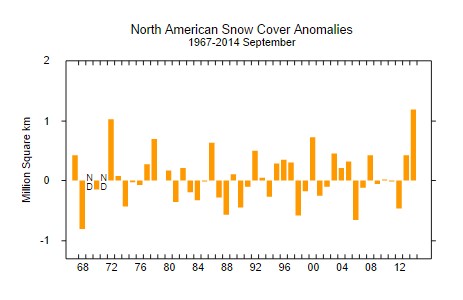
She replied: "It's WONDERFUL!" no doubt mindful of the record snow and cold we experienced last winter.
Today, I see this headline: U.S. seems to have largely escaped winter
But reading further down: "this December the seventh-coldest since 1877."
No where in "the news" do I hear about the increase in solar activity since last winter.
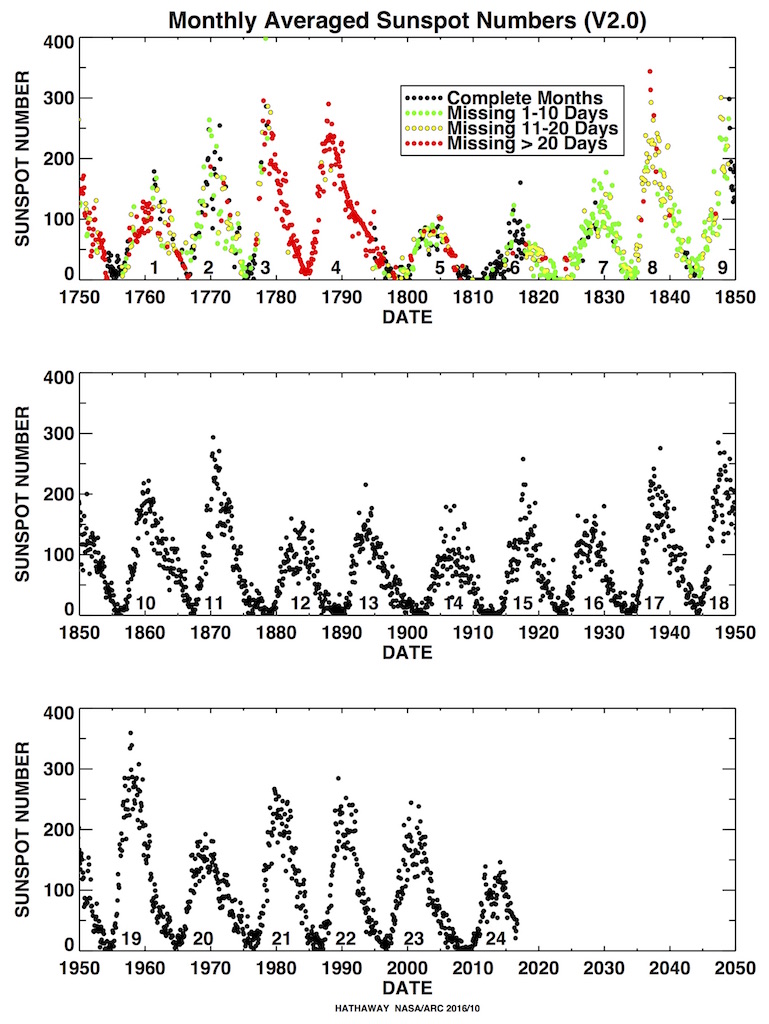
http://solarscience....spotCycle.shtml
USA seems to have escaped winter!
U.S. seems to have largely escaped winter
A combination of factors has trapped winter's cold air over Canada and Alaska, making for unseasonably warm weather in the Lower 48.
"If you look at U.S. temperatures, you'd say, 'Wow, it was a warm winter,'" said Dan Cayan, a climate researcher at the U.S. Geological Service and the Scripps Institution of Oceanography in La Jolla. And you'd be right.
"But," he added, "in the coastal West, it's been cool."
Overnight low temperatures were also cooler than average, making this December the seventh-coldest (by that measure) since 1877.
Scientists said the cyclical cooling in the Pacific Ocean known as La Niña was a likely cause for dry conditions in California and across the nation.
There's an 82% probability of less-than-normal rainfall in a La Niña year, said Bill Patzert, a climate researcher at the Jet Propulsion Laboratory in La Cañada Flintridge.
La Niña has also helped keep the jet stream on a west-to-east path over Canada, preventing cold Arctic air from dipping into the Lower 48 states, he said.
A phenomenon known as the Arctic Oscillation has reinforced that effect, Patzert said.
The oscillation is a pattern of pressure that wraps itself around the North Pole. When the pressure is low, as it has been for most of this winter, the oscillation captures the cool air that normally breaks out of the Arctic and moves into Canada.
The Arctic Oscillation shifted in January, leading some meteorologists to predict that cold air would soon dip farther south, allowing the winter to finally begin in earnest.
But since La Niña can persist for years, Cayan said he suspected it was unlikely California would catch up on rain and snowfall this year.
"We're so far behind right now," he said.
Edited by Rogerdodger, 27 January 2012 - 09:24 PM.