


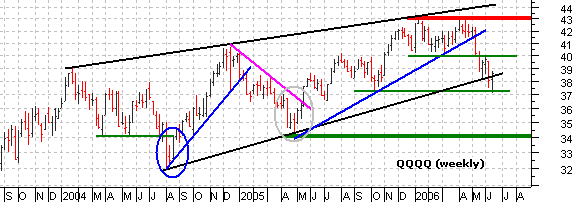
Before leaving the weekly chart, I would like to review the August 2004 and April 2005bottoms. These were significant lows and the reversals were different. In Aug-04 the stockbroke support at 34 and immediately recovered this break with a surge in the second halfof August. The inability to hold the support break showed strength (blue oval). TheApr-May low occurred after a falling price channel formed and there was a clean breakoutin early May (gray oval). Just like early Aug-04, the index now has a clear support breakat 40 and must reclaim this break before I can consider reversing my bearish stance.
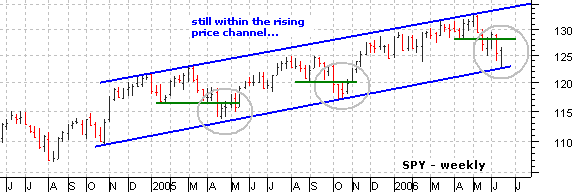
I turned bearish on the S&P 500 (SPY) on 19-May-06 at 1262 (126.2). SPY remains withina rising price channel and bounced off the lower trendline this week. The current six weekdecline looks quite similar to the declines in Mar-Apr 2005 and Sep-Oct 2005 (gray ovals).Both broke support and then recovered these support breaks to resume the bigger uptrend.Technically, the SPY is holding the lower channel trendline and still working its wayhigher. However, the stock broke support at 128 and pierced support at 124. The latterrepresents support from broken resistance and this level is vital to the bullish cause.
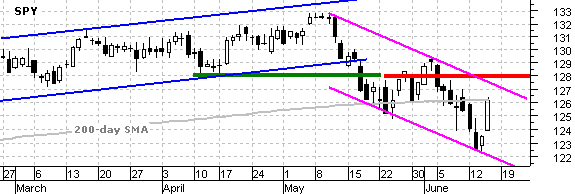
The chart above focuses on the current decline in SPY. The stock reached the lower channeltrendline on Tuesday, firmed on Wednesday and surged back above 126 on Thursday. It is agood start, but there is a lot of resistance just ahead (200-day moving average, upperchannel trendline and broken support at 128). Before we can take this surge seriously, thestock must follow through with a break above 128 and reclaim broken support.
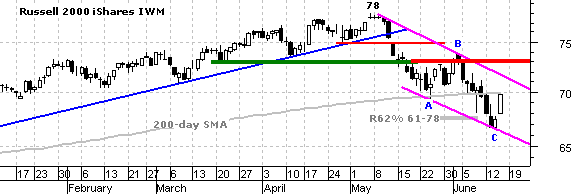
I turned bearish on the Russell 2000 (IWM) on 19-May-05 at 718 (71.25). I must admit thatthe current decline looks like a classic correction. First, let’s review the twotypes of price movements. Impulse moves are in the direction of the trend. Correctivemoves run counter to that trend. IWM advanced from 61 to 78 and recorded a new all timehigh in May. Obviously that was an impulse move in an uptrend. This makes the currentdecline a corrective move because it runs counter to the uptrend. In addition, the declineretraced 62% of the Oct-May advance, formed a falling price channel and traced out an ABCpattern. These are all classic symptoms of a correction. While this may indeed be acorrection, the correction has yet to end as long as the channel falls. At the very least,IWM needs to recoup its 200-day, break the upper channel trendline and move back abovebroken support. Until then, I remain bearish, even if it is just a correction.
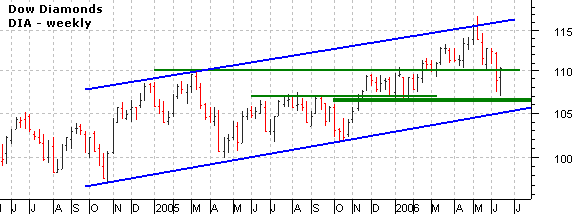
The Dow Diamonds (DIA) bounced off its lows this week and closed above 110. Some sort ofbounce of consolidation was expected in this support zone (106-110) and that is exactlywhat we are getting.
***Breadth***
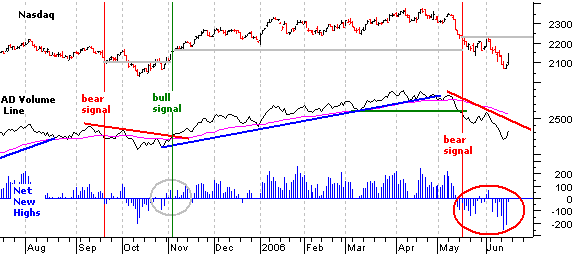
Nasdaq breadth remains on a bear signal. After Thursday’s big advance, I was eager tosee the affect on breadth – and it was negligible. The AD Volume Line did perk upover the last two days, but remains well below the red trendline extending down from theMay high. In addition, it remains below its falling 50-day EMA. As long as both of thesehold, remaining bearish on breadth is a no-brainer. Net New Highs plunged this week andhit –262 on Tuesday. Net New Highs reached –215 in October and we are clearlyseeing more selling pressure this time around. The bears are on firm ground as long as NetNew Highs remain negative.
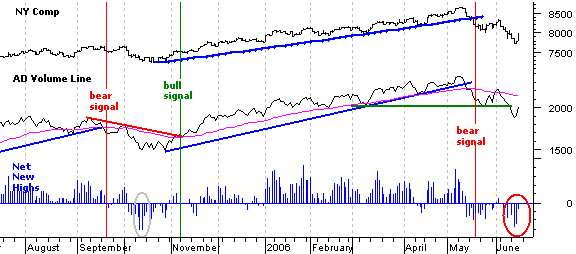
NYSE breadth remains on a bear signal. The AD Volume Line broke below the March and Maylows this week and we not have a clear bear signal. Perhaps more importantly, we also havea trendline extending down from the May high to define the strength of this signal. Aslong as the trendline and falling 50-day EMA holds, the bears are clearly in control ofvolume. Net New Highs dipped to –279 this week and selling pressure intensified. Thisweek’s low was not as low as October (-323), but there is no sign of strength. Withthe recent breakdown of the Finance sector, the new lows list could be set to expandfurther.
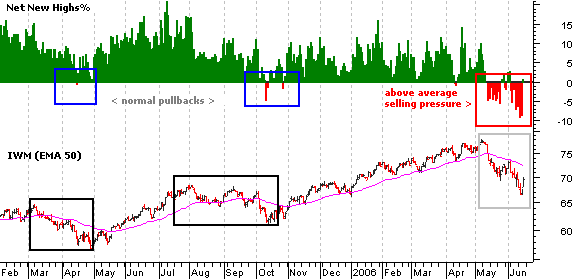
I am going to show this chart again because it says a lot about the current state of thestock market. These are Net New Highs on the Russell 2000 ($RUT or IWM). Net New Highsdipped into negative territory in Apr-05 and Oct-05, but these dips were relatively minorcompared to May-06 and Jun-06. May witnessed an increase in selling pressure and new lowsreally surged in June (red box). Those stocks that were close to 52-week lows in May hitthem in June. Those that are close to 52-week low in June, will likely record 52-week lowsin the coming weeks.
***Sectors and Industries***
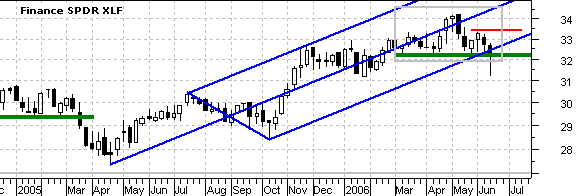
I have talked a lot about the importance of the Finance sector and it is starting to breakdown. The Finance sector is the single biggest sector and represents around 20% of theS&P 500 and NYSE Composite. The price chart shows XLF with Andrew’s pitchfork(blue trendlines). The middle line is a linear regression and the other two run parallel.The stock pierced the lower trendline and Mar-Apr lows this week and a close below 32would break support. This would be a major blow to the S&P 500. The pattern sinceMarch looks like a head-and-shoulders (gray box) and a hammer may be forming at supportthis week. Watch for a move above the early June high (33.5) to put the bulls back ontrack.
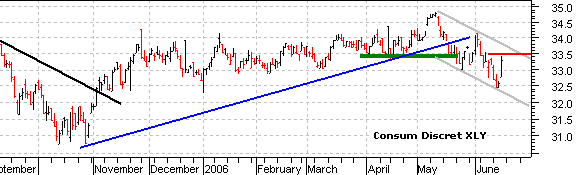
The Consumer Discretionary SPDR (XLY) also broke down over the last two weeks and this isa big negative for the broader market. The decline may look like an ABC correction andfalling price channel, but it is still falling as long as the upper trendline holds.Broken support at 33.5 turns into resistance and this is the first level to watch for arecovery.
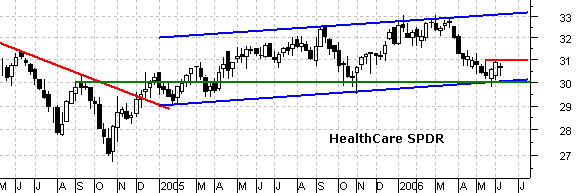
I am going to run through all five Nasdaq groups this week. All are trading near supportand four are quite oversold. This increases the odds of a bounce or a consolidation. Wesaw a big bounce on Thursday and I will be showing the weekly charts just to keep thingsin perspective.
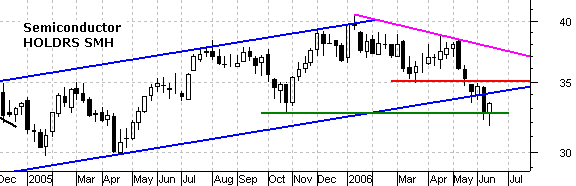
The Semiconductor HOLDRS (SMH) is finding support near its October low and formed a smallwhite candlestick thus far this week. The Wall Street Journal (Heard on the Street) talkedof Intel as a value stock. Yeah, yeah, value schm-alue, Microsoft was also considered avalue stock at 26-27 (currently 22). Beware of the value trap. SMH is oversold and thesupport break at 35 dominates the current chart. At the very least, I want to see a breakabove this level before taking any bounce seriously.
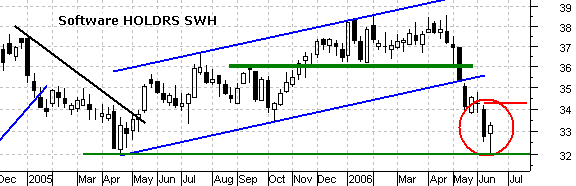
The Software HOLDRS (SWH) is also oversold, at support and firming. SWH broke its Octoberlow and firmed near its April low this week. A hammer is forming this week and a haramiover the last two weeks. This could foreshadow a bounce of consolidation and I am watching34.5 for a break.
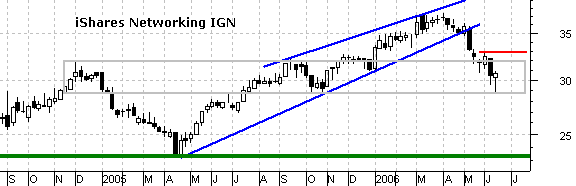
The Networking iShares (IGN) declined to the support zone around 30 and formed a hammerthis week (provided the close is around 30.7). Support stems from broken resistance andthe Aug-Oct consolidation (gray rectangle). Look for a move above 33 to get the bulls ontrack.
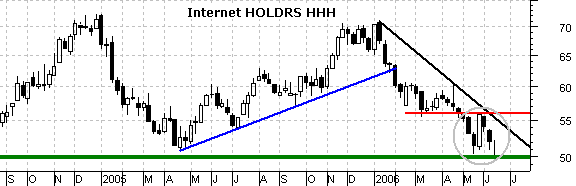
The Internet HOLDRS (HHH) started it all with a sharp decline in January and continuationlower in April-May. However, even this lowly group found support over the last two months.In fact, HHH held its May low and is actually performing better than the Nasdaq, which didnot. A double bottom of sorts is taking shape on the daily chart and there is supportaround 50 from the Aug-04 and Apr-05 lows. This is a good spot for a bounce and a breakabove 56 would be bullish for the internet group.
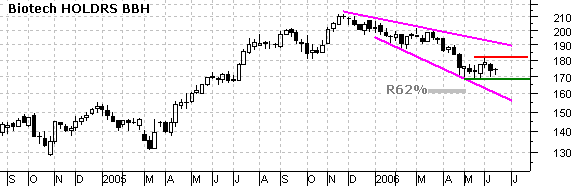
And finally, the Biotech HOLDRS (BBH) held firm during May and early June, but forgot torise with the rest of the Nasdaq on Thursday. This is not a good sign. The ETF has beenconsolidating the last seven weeks and needs to clear the early June high to forge abreakout. There was a surge in May, but it failed to hold and further weakness below 167would be bearish. AMGN and DNA are both in holding patterns and support breaks in thesetwo components would be bearish.
***Intermarket***
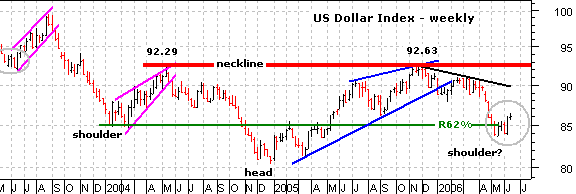
I turned bearish on the US Dollar Index on 18-Apr-06 at 88.64 and am reversing my positiontoday (bullish around 86). The index firmed around 85 and formed a consolidation over thelast 5-6 weeks (gray oval). The move to 85 retraced 62% of the prior advance and the bigpattern looks like an inverse head-and-shoulders. This is the do or die spot for theDollar. The breakout at 86 is quite positive and I will turn bullish while the risk-rewardratio is good. Failure to hold the breakout and a move below 83 would be very bearish.
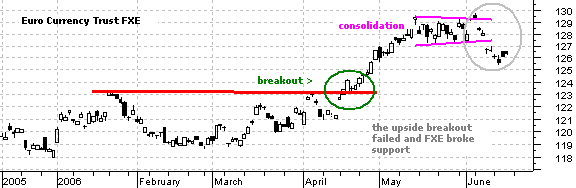
The upside breakout in the US Dollar Indexcoincides with a failed breakout in the Euro Currency Trust (FXE) and I am turning bearishon FXE (currently around 126.25). I will be switching to FXE for my analysis next weekbecause this is a tradable instrument (ETF).
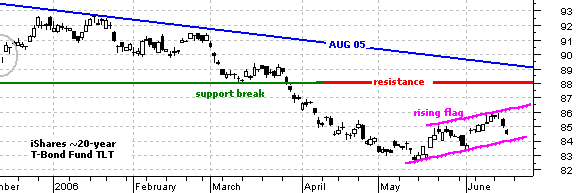
My stance on the TBond ETF (TLT) turned bearish on 3-Mar-06 at 89.5. I remain bearish onbonds long-term, but the short-term trend is up as a corrective advance takes hold (risingflag). Bonds got hit hard over the last two days, but TLT remains above the lower flagtrendline. Rising flags are typically bearish patterns that require confirmation with amove below the lower trendline and prior low (83.35). For now, the early June gap isholding and this rally could extend to around 88.
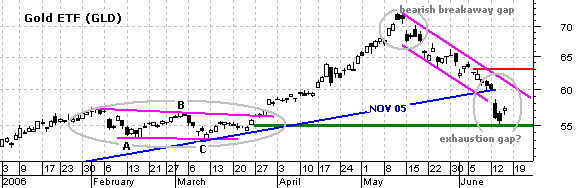
My stance on gold turned neutral on 10-Feb-06 at 55 and I am turning slightly bullish asgold tests support around 55. Just as GLD became oversold and extreme above 70, it isoversold and extreme around 55. There is a lot of support in this area from the Feb-Marconsolidation. Tuesday’s gap down is bearish as long as it holds. A move back above60 would make this an exhaustion gap and this would signal, well, exhausted sellers. Theonly play I see is for bottom picking near current levels (57.07). This is some realbottom picking as gold remains in the falling knife category. A stop-loss would then beplaced just below 55 (54.8). I am going to try this with a small position and set a mentalstop at 54.8. Due to volatility, I will refrain from setting a hard stop. Even though along in gold goes contrary to a bullish stance on the US Dollar Index, it works as ahedge.
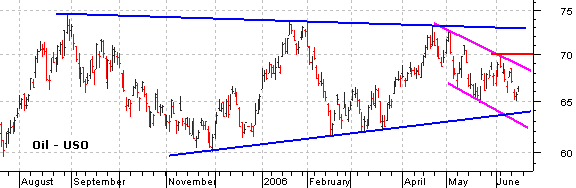
I am switching my analysis from the continuous futures for West Texas Intermediate Crude(WTIC) to the U.S. Oil Fund ETF (USO). I obtained some historical data fromstockscharts.com. Extrapolating from my WTIC position, my stance on the U.S. Oil Fund ETF(USO) turned bullish on 15-Dec-05 at 66 and remains bullish. Whereas WTIC shows higherhighs in January and April, USO shows lower highs and a large symmetrical triangle. USOhas been trending lower the last two months and there is lots of support around 64-65. Infind the price action over the last six weeks similar to that seen in September (grayovals). The Sept break at 65 carried on down to 60 and this could happen here. Therefore,I really do not want to ride a long position below 65 and will move to the sidelines (turnneutral) at 64.8.
Have a great weekend&
--Arthur Hill


