


By Arthur B. Hill - Fri 04-Aug-2006

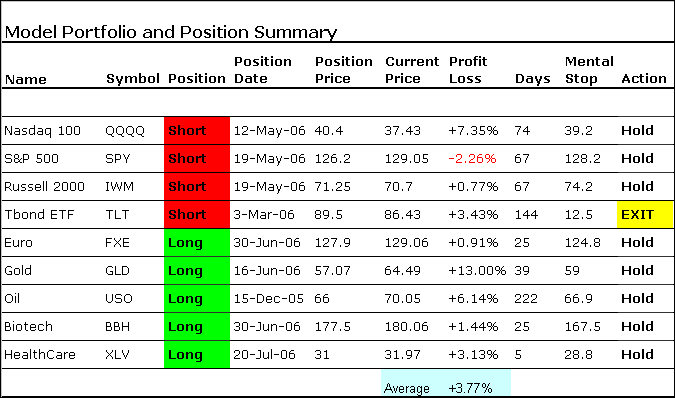
We saw significant action in the intermarket arena this week. The weak employment report triggered important breaks in bonds and the US Dollar Index. As such, I am making adjustments to the Model Portfolio.
***Overview***
Non-Farm Payroll came in below expectations and Wall Street reacted with a big gap up on Friday morning. This reaction was expected, but stocks stalled after the first 30 minutes and pulled back by the end of the first hour. The gaps are largely holding, but follow through has not been impressive so far. Perhaps there will be some follow through later this afternoon. Perhaps not. Failure to follow through and a sharp move lower would be most bearish for stocks overall.
How important is follow through? Pretty darn important. The Nasdaq 100 ETF (QQQQ), S&P 500 ETF (SPY) and Russell 2000 iShares (IWM) are all trading at make-or-break points for the medium-term trend. SPY is trading near its early July high. QQQQ is trading right at the May trendline. IWM is trading near the May trendline and 200-day moving average. As noted in detail below, I think it is important that QQQQ and IWM lead the way higher. Without leadership from these high-beta ETFs, the advance will be just a narrow and selective rally destine to fail.
***Model Portfolio Notes***
The S&P 500 ETF (SPY) is leading the charge over the last few weeks, but the Nasdaq 100 ETF (QQQQ) and Russell 2000 iShares (IWM) are lagging. As such, I will keep my shorts in QQQQ, IWM and SPY. The rally is missing something and I have not seen enough to justify turning bullish on the overall stock market. Let’s see how stocks close today (follow through or no follow through).
As noted in the inter-market section below, the iShares ~20-year T-Bond Fund (TLT) broke resistance with a gap up today. This breakout confirms a double bottom on the daily chart and I am turning bullish on bonds (currently around 86.43).
I already have a position in the Euro Currency Trust (FXE) and do not need two. The US Dollar Index broke an important support level on Friday and this is bullish for the Euro Currency Trust (FXE) and Swiss Franc Trust (FXF). Both charts are detailed in the inter-market section.
***Economic Weak***
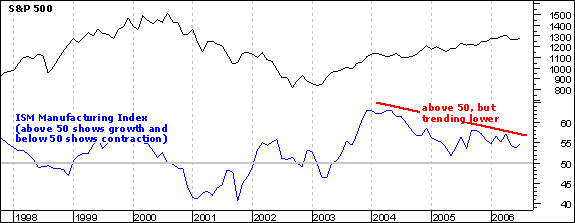
Yes, the pun was intended because this week’s economic stats reflect slowing growth and rising inflationary pressures. At the beginning of the week, the National Association of Purchasing Managers Index and ISM Manufacturing Index came in above expectations. These signs of a buoyant economy triggered selling pressure as Wall Street worried more about rising interest rates (no Fed pause).
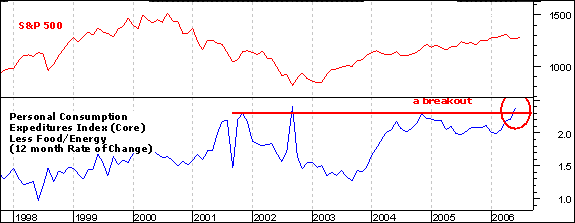
In addition, the Personal Consumption Expenditures Index rose on Tuesday. This index reflects personal spending and there is no sign of a slow down here. Hmm…. More spending seems bullish for stocks to me. However, money chasing goods leads to price increases or inflation. The 12-month rate-of-change moved to its highest level since 2002 and this stoked fears of inflation on Tuesday (no Fed pause). The combination of stronger than expected growth and continued inflation sent stocks lower on Tuesday.
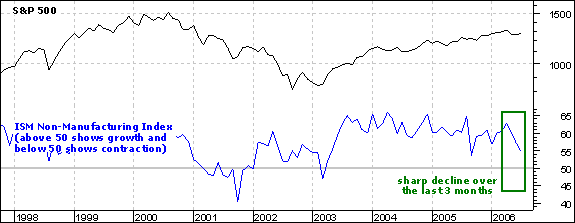
Later in the week, Factory Orders and the ISM Non-Manufacturing Index came in below expectations and showed signs of slowing growth. Wall Street likes slowing growth these days because it increases the chances of a Fed pause. Never mind that it also increases the chances of lower earnings and this will ultimately weigh on stocks. In any case, stocks rebounded on Wednesday and Thursday as the “one and please be done” crowd jumped into the market.
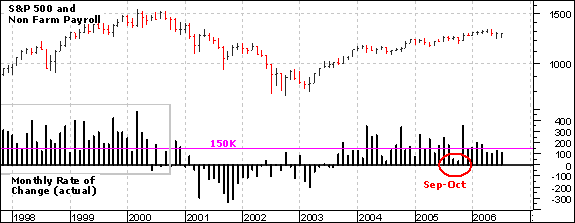
Wall Street got what it wanted on Friday as Non-Farm Payroll came in below expectations and this further hints at a slowing economy (113K versus 145K). This is the fourth straight month below 150K. However, jobs growth remains above 100K there are not real economic worries unless job growth turns negaive (2000 and 2001). What are we to make of these economic stats? First, they are history. The reports issued in early August are for economic activity in July. However, we can see trends in this statistics and the same trend keeps coming back over and over again. Economic growth is slowing and inflationary pressures are growing. This amounts to stagflation. Even though the economy is slowing, we have yet to see signs of a recession or economic contraction. So, the economy is still growing, just not as fast as before. This means that stock prices must adjust to slowing growth.
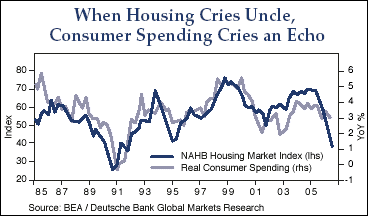
July chain store sales were reported on Friday and these sales were strong. Apparently hot weather drove consumers into the shopping malls. This prompted a rally in the Retail HOLDRS (RTH) and Consumer Discretionary SPDR (XLY). While I find strong retail sales to be generally bullish, I remain skeptical after viewing the chart above comparing Consumer Spending and the Housing Market Index. The correlation is pretty good and the Housing Market Index dropped sharply over the last few months. Consumer Spending usually follows and this suggests a sharp drop in the coming months. As noted many times before, Consumer Spending drives 2/3 of GDP and a drop in this key variable would be felt throughout the economy.
***Broad Market ETFs***
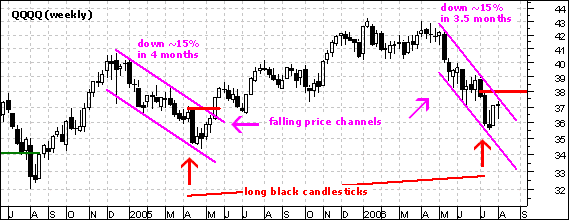
The broad market ETFs remain in downtrends that began in May. On the QQQQ chart above, the stock remains in a falling price channel and has yet to break key resistance at 38. The falling price channels (magenta trendlines) are similar in duration (3-4 months) and depth (~15%). The first one ended after a long black candlestick and the current one formed a long black candlestick four weeks ago (red arrows). The trend reversed with a break above the upper trendline and high of the long black candlestick (May-05). To reverse the current downtrend, QQQQ needs to break the upper trendline and move above 38. The most glaring difference: the current price channel is much steeper than the first. This shows that selling pressure was much more intense.
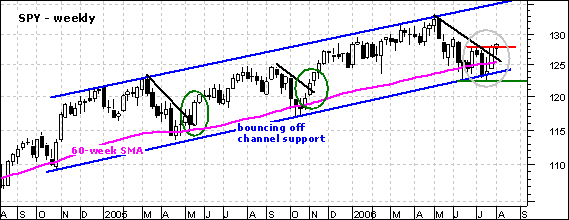
The S&P 500 ETF (SPY) is stronger than QQQQ and SPY is making an attempt to continue its long-term uptrend. First, notice that SPY held the lower channel trendline and 60-week moving average. Second, SPY held its June low while QQQQ moved below its June low in July. Third, SPY has already broken back above the May trendline and its June high. This resurgence has been led by HealthCare and Finance, two of the biggest sectors in the S&P 500.
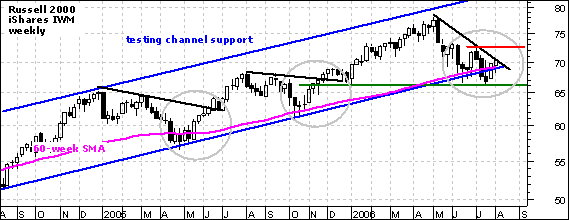
Will the third time be lucky for the Russell 2000 iShares (IWM)? This ETF is also finding support from the lower channel trendline and 60-week moving average. The ETF moved below its June low in July, but bounced back and held this low for all intents and purposes. I also see support around 66 from the December low and November breakout. IWM is challenging the trendline extending down from May and a break above the June high (73) would signal a continuation of the long-term uptrend.
What is wrong with this picture? QQQQ and IWM show relative weakness. These ETFs are full of high beta stocks that should outperform on an advance. SPY and DIA advanced over the last three weeks, but QQQQ and IWM are lagging badly. QQQQ barely made it above its July high and IWM remains below its July high. The market currently favors large-caps over small-caps and non-techs over techs. This usually happens in a defensive market. Before I can put faith in a breakout for SPY, I would also have to see QQQQ and IWM follow suit and even start to lead again. Without these two leading, breakouts in SPY and DIA should be greeted with suspicion.
***Value Growth ETFs***
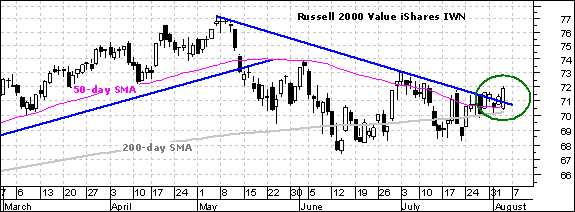
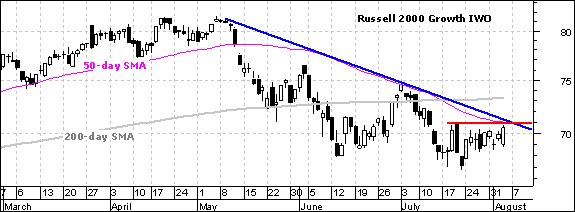
Relative weakness in the growth components is weighing the Russell 2000 down. The Russell 2000 Growth iShares (IWO) remains below its May trendline, mid July high and 50-day moving average. In contrast, the Russell 2000 Value iShares (IWN) held above its June low in July and broke above its mid July high on Thursday. If you are going to play, then value is preferred over growth. This preference for value also reflects a defensive market.
***Overall Breadth Mixed***
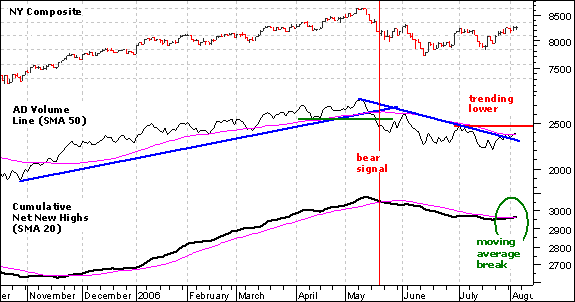
I am getting mixed signals from NYSE breadth. This can be attributed to strength in interest rate sensitive issues and HealthCare. The NYSE Composite moved above its July highs this week, but the AD Volume Line failed to follow suit and remains below this corresponding high. The AD Volume Line did break the May trendline and moved above its 50-day EMA this week. Follow through above the July high would trigger a medium-term bull signal. The Cumulative Net New Highs Line turned up this week and moved above its 20-day moving average. Another strong week and both indicators will be back on medium-term bull signals.
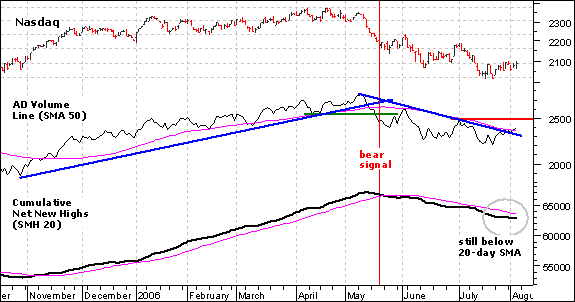
Nasdaq breadth remains in bear mode and weaker than NSYE breadth. Again, relative weakness in the Nasdaq is a recurring theme and I would be uncomfortable turning bullish on the overall market as long as the Nasdaq lags. The AD Volume Line broke above the May trendline and 50-day EMA, but remains below the July high. The Cumulative Net New Highs Line remains below its 20-day moving average as new lows continue to outpace new highs.
***Sector ETFs***
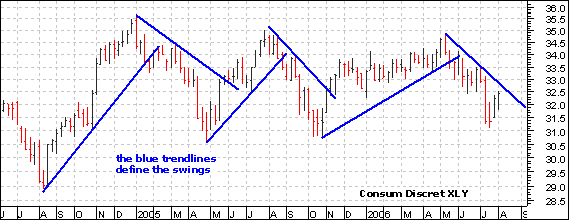
The Consumer Discretionary SPDR (XLY) was a major drag on the broader market from early May to mid July. The EFT firmed in mid July and bounced over the last two weeks. However, it remains shy of breakout and the current swing remains down. The S&P 500 is not going far without help from this key sector. There have been six swings in the last two years and it would take a break above 33 to reverse the current downswing. This would be most positive for the S&P 500 and broader market. Let’s see it happen first!
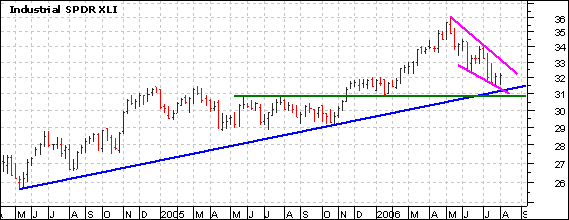
As it’s name implies, the Industrials SPDR (XLI) is important to the Dow Diamonds (DIA). Both ETFs feature Boeing, UPS, Caterpillar, 3M and General Electric. From the weekly price chart, I can make an argument for a long-term uptrend because XLI is holding the May-04 trendline. The decline over the last few months was sharp, but looks like a falling wedge and there is lots of support around 31-32. XLI firmed over the last two weeks and a break above the upper wedge trendline (33) would signal a continuation of the long-term uptrend. Again, show me the breakout first. If both XLY and XLI can forge breakouts, there would be little reason to stay bearish on stocks overall.
***Industry Group ETFs***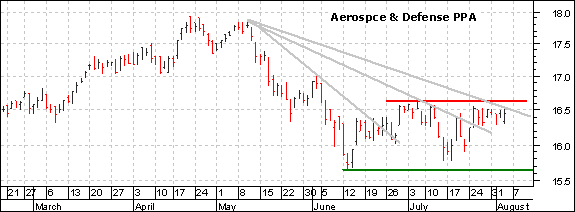
The Aerospace & Defense PowerShares ETF (PPA) has been one of the stronger ETFs the last two months. While the Nasdaq dipped below its June low in July, PPA held above its June low and is trading near resistance at 16.65. I have drawn three fan lines and a move above the early July high would break the third. In addition, the ETF consolidated the last seven days and break above the consolidation high would be bullish.
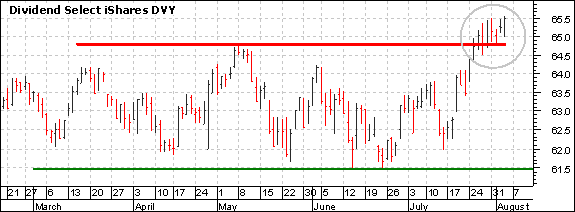
A breakout in the Dividend Fund Select (DVY) provides further evidence of the defensive nature of the current market environment. Investors are looking for income and safety. This is what dividends provide. Even though the chart is clearly bullish, I would not recommend chasing this breakout.
***InterMarket ETFs***
The big news in the inter-market arena is the breakout in the iShares ~20-year T-Bond Fund (TLT) and the breakdown in the US Dollar. The employment report came in below expectations and this prompted a sharp rally in bonds and fall in the US Dollar. Slower jobs growth means slower economic growth. Slower economic growth favors a pause in interest rates.
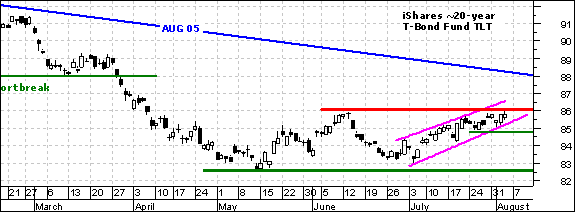
Accordingly, the iShares ~20-year T-Bond Fund (TLT) broke resistance with a gap up today and this confirms the double bottom that formed over the last few months. Based on traditional technical analysis, the upside target is to around 89.5. The length of the pattern (3.5) is added to the breakout point (86). If you look at an intraday chart for TLT, you can see that the ETF gapped down on the open each of the last three days. However, it rallied back each day and broke resistance with a gap up today. There is strength in bond-land.
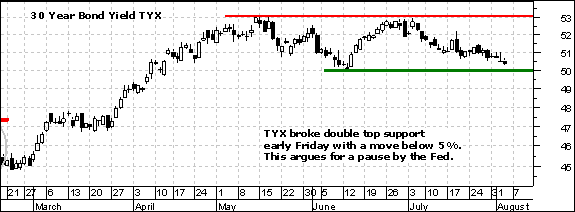
This breakout coincides with a double top support break in the 30-year T-Bond Yield (TYX) and this argues for a pause by the Fed. TYX broke below 5% in early trading on Friday.
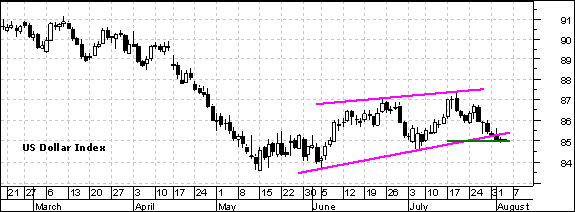
The US Dollar Index formed a rising wedge over the last few months and broke support with a sharp move below 85 today. The rising wedge is typical for corrective patterns and the breakdown signals a continuation of the Mar-May decline. I now expect a move below the May low.
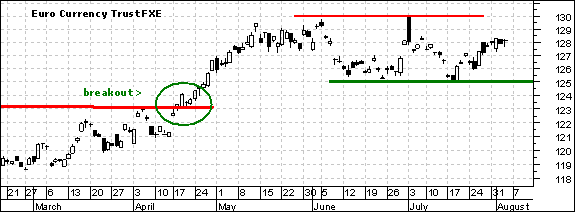
If I expect the US Dollar Index to move lower, then I expect the Euro Currency Trust (FXE) to move higher. FXE turned bullish with the April breakout and held support at 125 in June and July. There is still some resistance around 130, but I expect a breakout here. Key support remains at 125.
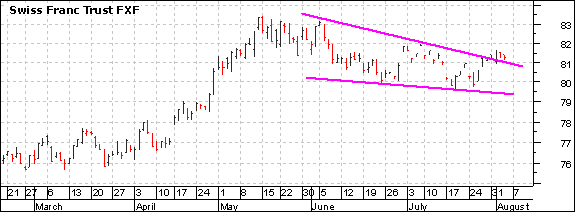
While the US Dollar Index formed a bearish rising wedge the Swiss Franc Trust (FXF) formed a bullish falling wedge. After an advance, a falling wedge acts as a correction and usually retraced around 50% of the prior advance. FXF corrected back to 79.5 and broke the upper wedge trendline this week. The ETF is challenging resistance at 82 as I write on Friday and the breakout calls for a continuation of the Mar-May advance.
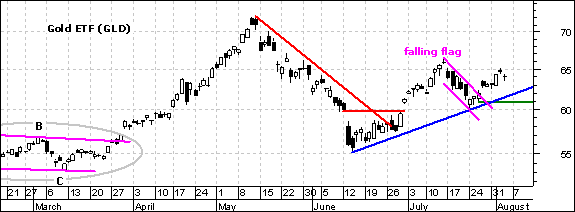
Weakness in the US Dollar Index sparked buying in gold and the StreetTracks Gold ETF (GLD) moved to around 65 in early trading on Friday. GLD fell back to 64.54 in the late morning, but the falling flag breakout from late July remains in play. As long as the falling flag breakout dominates, I expect a challenge to the May high around 72. I drew a trendline extending up from the June low and this is the first support level to watch for signs of trouble. A move below the trendline and support at 61 would be bearish for GLD.
Have a good weekend –Arthur Hill
Next Report: Friday 11-August-06
ETF Investment Outlook is a weekly newsletter that is usually published every Friday. Changes to the position table or model portfolio are sometimes necessary between publications and special portfolio alerts will be issued by email and posted to the website when necessary.
Disclaimer: Arthur Hill is not a registered investment advisor. The analysis presented is not a solicitation to buy, avoid, sell or sell short any security. Anyone using this analysis does so at his or her own risk. Arthur Hill and ETFInvestmentOutlook.com assume no liability for the use of this analysis. There is no guarantee that the facts are accurate or that the analysis presented will be correct. Past performance does not guarantee future performance. Arthur Hill may have positions in the securities analyzed and these may have been taken before or after the analysis was present.


