


***Position Summary***
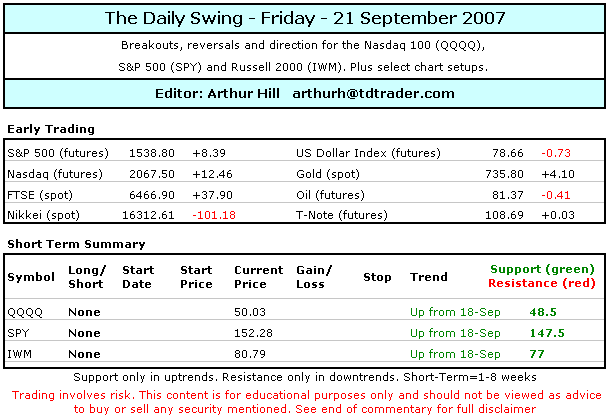
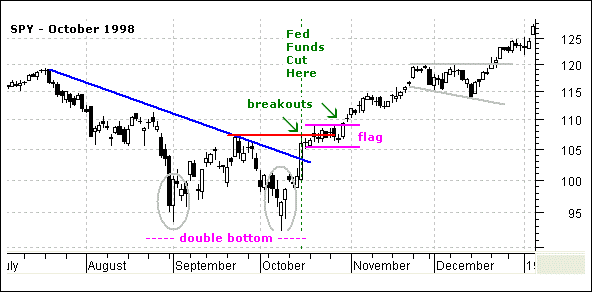
After a big surge on Tuesday, stocks consolidated on Wednesday and then pulled back on Thursday. A little pullback or consolidation is perfectly normal after such a surge and we have falling wedge or flag patterns emerging on the 60-minute charts. Wedge/flag breakouts would be short-term bullish and signal another continuation higher. These resistance levels are noted in the IWM, QQQQ and SPY charts below. I am not going to buy the first breakout and prefer to give stocks a little more time to digest recent gains and Fed action. As noted on prior breakouts in 1998, 2006 and 2007, SPY consolidated for 1-2 weeks before moving higher. The current consolidations are just 1-2 days old and I think more time is needed to digest these gains.
The stock setups page is updated on Tuesdays and Fridays. ***Click here***
***Technical Highlights***
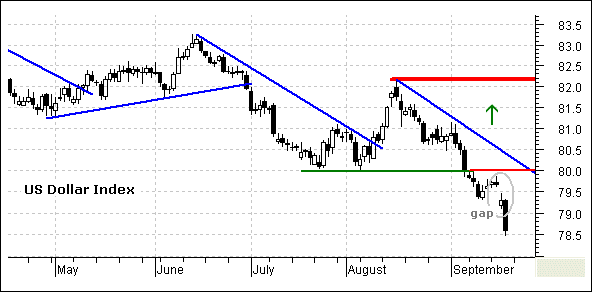
~Pull Back~ Stocks pulled back on Thursday with small losses in the major index ETFs. The Russell 2000 ETF (IWM) led the way lower as small-caps bore the brunt of selling pressure. Seven of the nine sectors were lower with Consumer Discretionary, Finance and Utilities leading the way down. Downside leadership in the Consumer Discretionary SPDR (XLY) and Finance SPDR (XLF) is a concern. Transports, which are part of the Consumer Discretionary sector, were slammed yesterday with airlines leading the way down. Once again, oil moved to another new high and remains above $80. Gold is benefiting from strong oil (energy inflation) and a weak U.S. Dollar. The yellow metal closed around $740 and the U.S. Dollar Index ($DXY) sank below 79, its lowest level since 1992. I will be covering all the inter-market charts today.
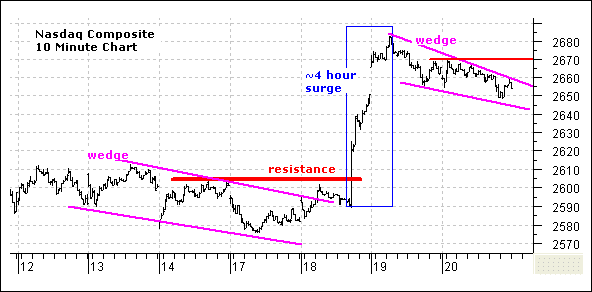
On the Nasdaq 10-minute chart, the last two days represent a consolidation after a surge. The index surged to around 2680 and then formed a falling wedge. This wedge looks similar to last week's wedge, but is smaller and tighter. A break above 2670 would signal yet another continuation higher. As long as this wedge falls and resistance holds, short-term traders should respect the pullback and lay low.
~What Do the Bulls See?~ As a technical analyst, I look at past prices and patterns to get ideas for current patterns and setups. The current surge and breakout are no exception and I have gone back to look at similar breakouts for clues.
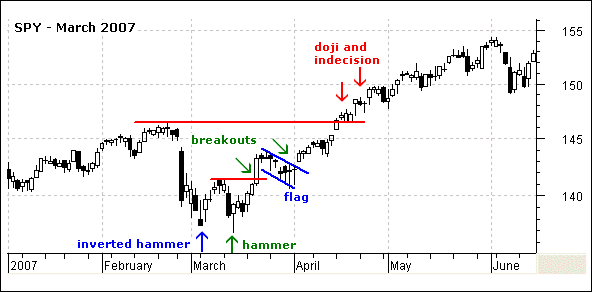
Using the S&P 500 ETF (SPY) as an example, the first similar setup occurred in March-April 2007. SPY declined sharply in February, firmed in March, broke resistance with a big move and followed though with further gains. The March lows featured an inverted hammer and a hammer. A flag followed the first breakout and this 1-2 week pullback provided another setup for entry. After the break above the February highs, the ETF formed a couple of doji that signaled indecision. However, these were never confirmed with a sharp decline and SPY kept right on trucking.
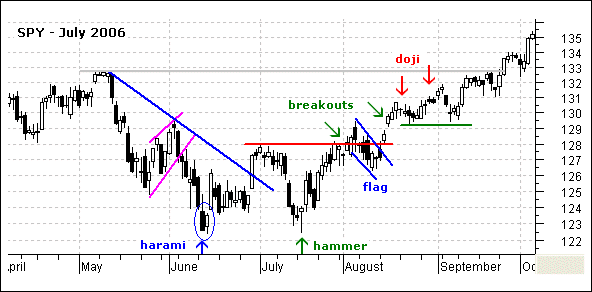
The next similar setup occurred in July 2006. SPY formed a double bottom with support around 122.5, broke resistance in early August, formed a falling flag and continued higher after the flag breakout. The double bottom featured a harami and a hammer. The flag breakout also provided a 1-2 week pullback and a second chance to enter. The ETF stalled below its May high with some doji, but never broke down and held minor support at 129.1 (green line).
The third similar setup occurred in October 1998 and this coincided with a Fed rescue after the LTCM debacle. Like the previous two, SPY formed a double bottom and surged off the second low. This surge coincided with a Fed rate cut and the ETF broke above the September high. A flat flag formed and the gains held. The flag breakout provided a second signal to partake in the advance.
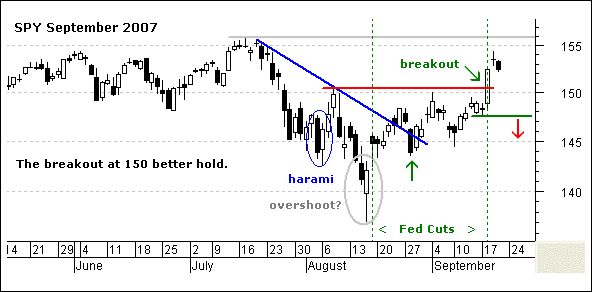
The current SPY chart and setup are not exactly the same as the prior three, but there are some similarities. It is also possible that the mid August plunge was a hedge-fund liquidation overshoot and a breakdown was saved by the first discount rate cut on 17-August. There are two lows around 143 with the early August harami and late August surge. The second Fed cut produced the breakout at 150 and this is bullish until proven otherwise. As noted in the prior charts, the strong breakouts hold and the most weakness we can expect is a falling flag or flat flag for 1-2 weeks. Such patterns could provide a second chance to partake in this breakout. Failure to hold the breakout and a move below 147.5 would be quite negative and call for a reassessment.
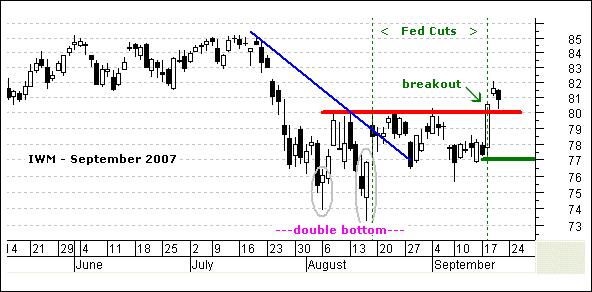
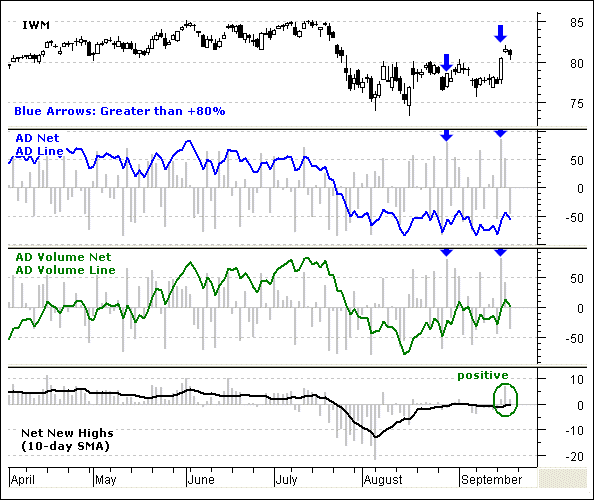
The current pattern and setup in the Russell 2000 ETF (IWM) more closely resembles the 1998, 2006 and 2007 setups in SPY. Each of these featured a sharp decline, a double bottom, a breakout and a 1-2 week flag consolidation. IWM formed a double bottom in August, surged to resistance with the first rate cut and then consolidated between 76 and 80. Tuesday's breakout is bullish until proven otherwise. A move back below 80 would be negative and a break below key support at 77 would be outright bearish. At this point, I would expect a flag or consolidation to form and we may get a second bullish setup over the next week or two.
~U.S. Dollar Index ($DXY)~ Are there any Dollar bulls out there? With 99.9% of the world Dollar bearish, this has got to be one of the most obvious contrarian plays around. However, even contrarians need to be wary of falling knives. The index broke below support at 80 and is about to enter uncharted territory with a gap down and long black candlestick. The latest breakdown affirms the current downtrend and broken support at 80 now becomes the first resistance level to watch.
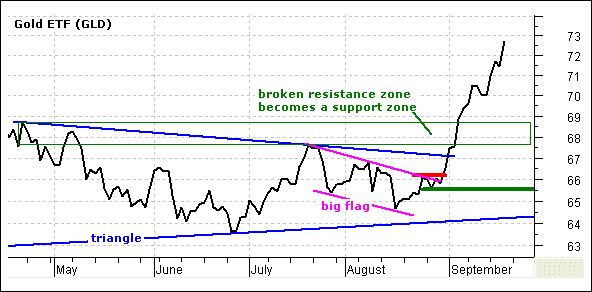
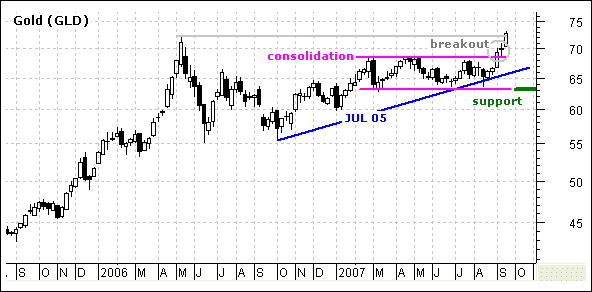
~streetTRACKS Gold ETF (GLD)~ As the U.S. Dollar Index ($DXY) sinks to new lows, GLD is going parabolic and rising to new highs. The ETF broke flag resistance in late August, broke triangle resistance in September and exceeded its May 2006 high. This puts GLD at multi-year highs and affirms the long-term uptrend. The ETF is getting overbought after a 10+ percent advance in the last five weeks, but shows no signs of weakness. At this point, I would wait for a pullback or bullish continuation pattern to emerge before considering new long positions. The last two resistance levels turn into support and this is the area to watch for a reversal after a pullback.
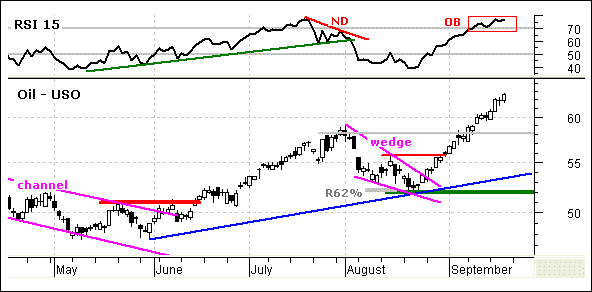
~United States Oil Fund ETF (USO)~ USO is now up around 25% in the last five weeks and getting overbought. We really do not need indicators to figure this out, but I will show RSI anyway. RSI moved above 70 to become overbought (OB) and remains above 70. This means USO is both overbought and strong. I would not expect a pullback until RSI moves back below 70 and/or forms a negative divergence (ND). Notice that a negative divergence preceded the August pullback. I would expect support around broken resistance (58) on any pullback. As long as oil remains strong, I would avoid transport related stocks and possibly even retail stocks as rising energy prices could dampen consumer spending.
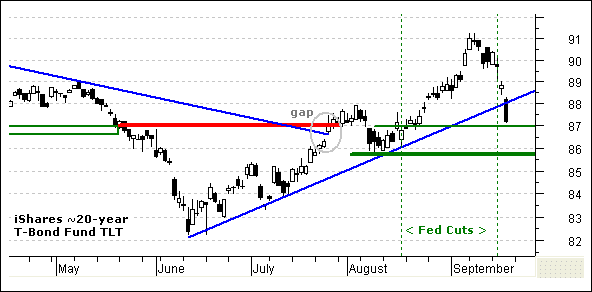
~iShares 20+ Year Bond ETF (TLT)~ This looks like a classic case of buy-the-rumor and sell-the-news. Bonds advanced on the rumors of a second rate cut and declined after the news hit. TLT surged from early June to early August, stalled around the first Fed cut and surged leading up to the second Fed cut. The ETF then declined sharply over the last three days and is now trading near support around 86-87. Support in this area stems from the August low and the mid August breakout. Is it one and done for the Fed? Bill Gross of Pimco expects the Fed Funds rate to reach 3% and this means more cuts down the road. This also points to higher bond prices and lower rates in the bond market. Therefore, I would expect bonds to firm in the next few days or weeks and then resume their advance.
***Nasdaq 100 ETF (QQQQ)***
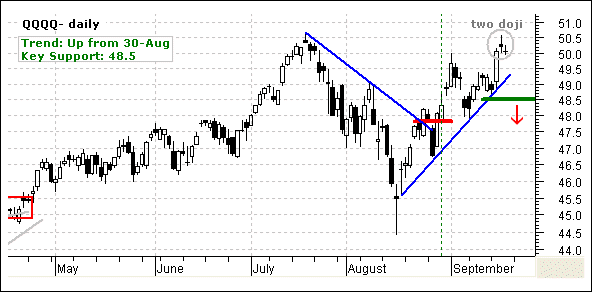
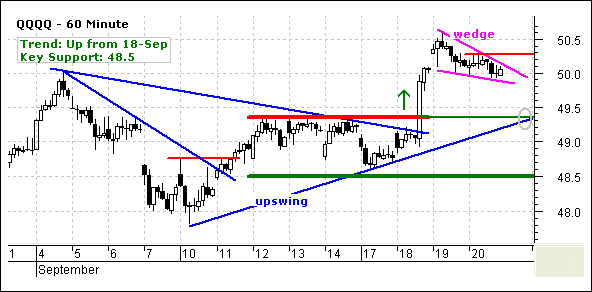
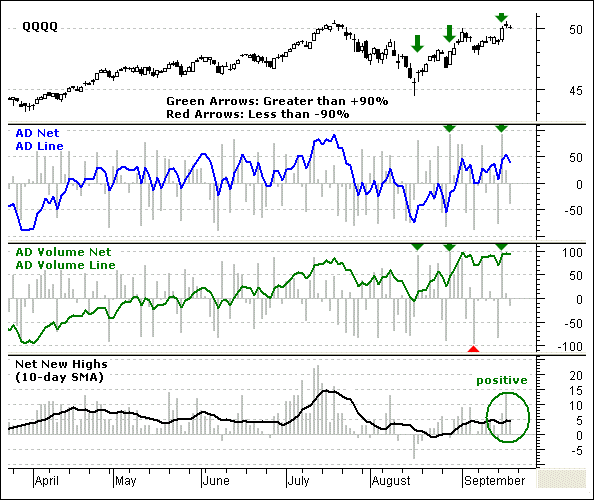
QQQQ held above 50 on Wednesday, but stalled with two doji over the last two days. There is resistance just above 50 from the July high and indecision here could foreshadow a top. I am raising key support to 48.5. Tuesday's big surge needs to hold and a move below Monday's low would reverse the five week uptrend. On the 60-minute chart, the two doji look like a falling wedge and this represents a mild correction or pullback. This is hardly surprising after such a big surge. A break above 50.3 would signal a continuation higher and revive the uptrend. As long as wedge resistance holds, I would respect this pullback and the first support zone is around 49.4 (gray oval)
Position: No current position.
***S&P 500 ETF (SPY)***
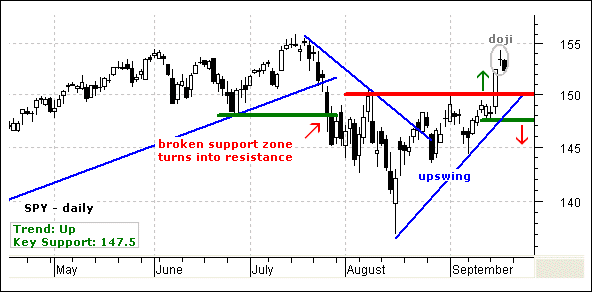
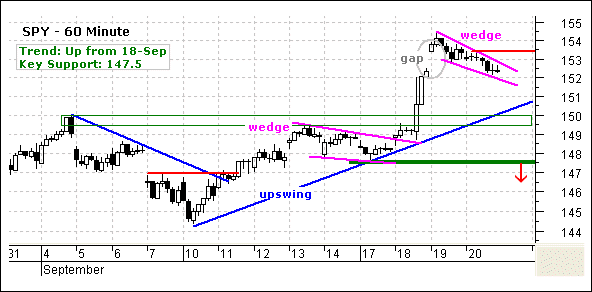
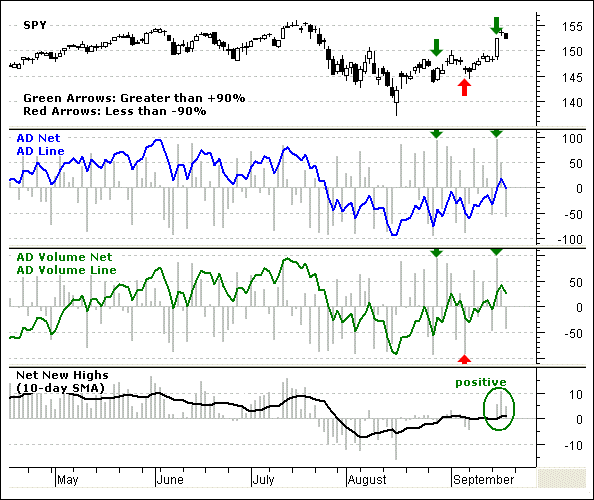
SPY formed a doji just below its July high and then declined yesterday. I am raising key medium-term support to 147.5 because a strong breakout and surge should hold. A move below 147.5 would negate the breakout at 150 and erase Tuesday's surge. This would be bearish and call for a top. On the 60-minute chart, SPY formed a tight falling wedge over the last two days and this represents a small correction after the surge. A break above 153.5 would reverse this wedge and call for a continuation of the prior advance. Broken resistances from the early September high and wedge high turn into a support zone around 149.5-150. As long as wedge resistance holds, I would respect this pullback and not consider a reversal until the ETF reaches this support zone.
Position: No current position.
***Russell 2000 iShares (IWM)***
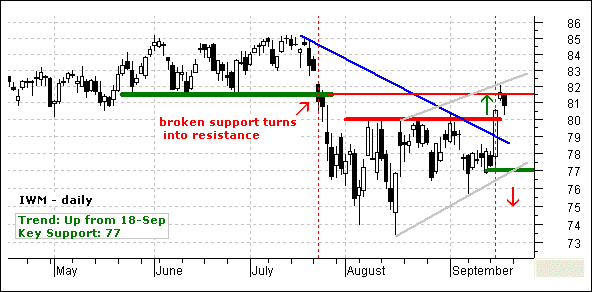
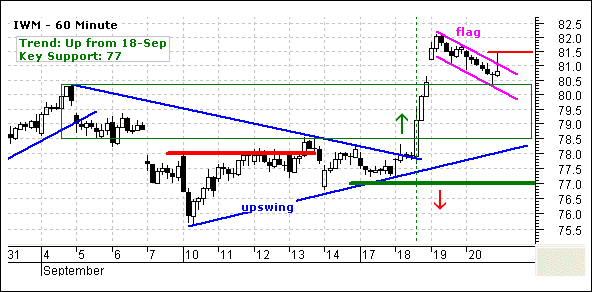
IWM gapped up and stalled around 81-82. Despite the break above resistance at 80, there is still resistance around 81-82 from broken support. For now, the breakout at 80 and gap are bullish. Look for a move back below 80 to call for a reassessment. Key support is set at 77 and based on Monday's low. Tuesday's surge had best hold and a move below Monday's low would reverse the current uptrend. On the 60-minute chart, IWM formed a falling flag over the last two days. This represents a small correction after the surge and a break above 81.5 would signal a continuation higher. I will respect the flag as long as it falls. There is a big support zone around 78.5-80 from the last two resistance levels, which turn into support.
Position: No current position.
Good day and good trading -Arthur Hill
---------------------------------------------------------------
Click here to post a comment, suggestion or question.
Breadth Charts ---------------------------------
---------------------------------------------------------------
Disclaimer: Arthur Hill is not a registered investment advisor. The analysis presented is not a solicitation to buy, avoid, sell or sell short any security. Anyone using this analysis does so at his or her own risk. Arthur Hill and TD Trader assume no liability for the use of this analysis. There is no guarantee that the facts are accurate or that the analysis presented will be correct. Past performance does not guarantee future performance. Arthur Hill may have positions in the securities analyzed and these may have been taken before or after the analysis was present.
--------------------------------------------------------
about: The Daily Swing is posted every trading day around 6AM ET and focuses on short-term strategies for QQQQ, SPY and IWM. In addition, at two stock setups are featured every day with a detailed trading strategy. As warranted, coverage extends to broad market topics, key sectors and industry groups and inter-market securities (gold, bonds, the Dollar and oil).
--------------------------------------------------------
Sources: Data from Bloomberg.com, CBOT.com, Kitco.com and ino.com; Charting from Metastock (equis.com). Closing data from Reuters.com, eSignal.com, MS QuoteCenter and Yahoo! Finance.


