



This is from our latest letter dated January 19,2010
We are beginning to see some cracks in the markets technical condition. This is so far only short-term in nature and mostly minor but it does show some weakness beginning to develop. One area that this is evident in is the fact that the rallies can not generate a good overbought condition but only mediocre ones. This is compounded by the fact that the market can not maintain this overbought condition. Deep and persistent overbought conditions are signs of strength that occur in the early to middle phases of a medium-term advance Weak and mediocre overbought conditions are consistent with a more mature phase of an advance. What we are seeing so far is only a short-term problem but is it persists it will no doubt begin to affect the medium-term position of the market as well.
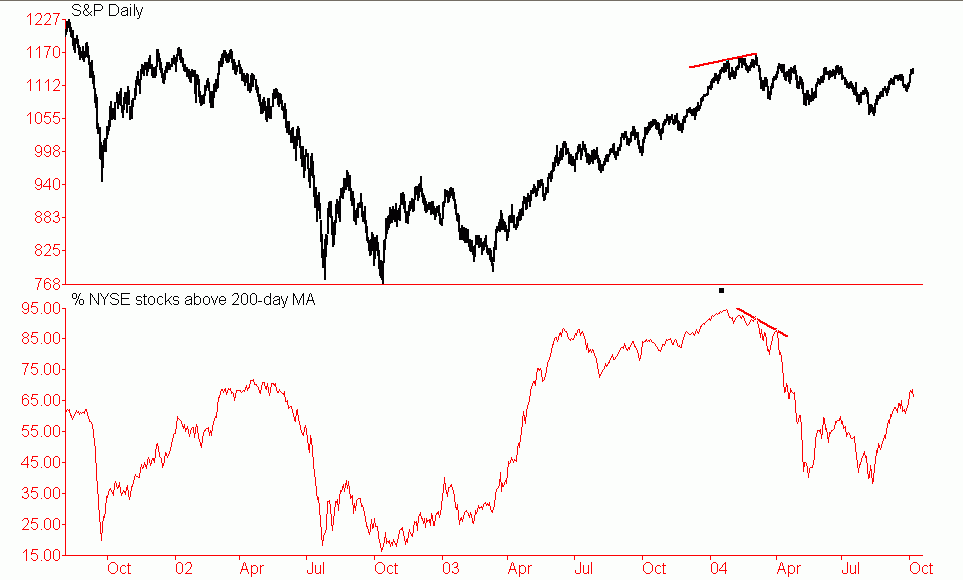
The majority of our indicators remain bullish for the medium and long-term. The A/D line confirmed the new post March highs last week. This does not rule out a short and even medium-term correction down the road. But in looking at nearly ninety years of data on breadth we find that there was only one occasion where the major averages declined by 15% or more without a breadth divergence and that was in 1976. However, that decline was limited to the big cap averages. The DJIA and the S&P had 205 or so declines while the small cap stocks were higher at the 1978 bottom then they were at the 1976 top. The odds are extremely rare to see any type of serious decline without some sort of breadth divergence/. Another important medium and long-term indicator in the same position is the percentage of NYSE stocks above their 200-day moving average. This indicator is diverging slightly with its mid October peak but it is still close to the 90% level which means that nearly 90% of the stocks on the NYSE are above their 200-day moving average. There are two important points in regards to the current position of this indicator. The fist is that while some measures of momentum are weakening the majority of stocks are still performing quite well. Second and more importantly is that fact that this indicator begins to turn down well in advance of any important medium-term top on those rare occasions when it does reach the rarefied levels near 90%. Moreover, readings at these levels not only have positive medium-term implications but also longer-term bullish implications. The first correction following a move down in this indicator from these levels tends to be relatively mild in terms of price although not necessarily time. A good example can be seen in the 2003-2004 period. The initial break in the indicator began in March-April of 2004. And while the S&P did correct into August (about five months) the extent of the correction in terms of price was about 8.8%. This can be seen on the chart below of the S&P and this indicator in the 2003-2004 period.
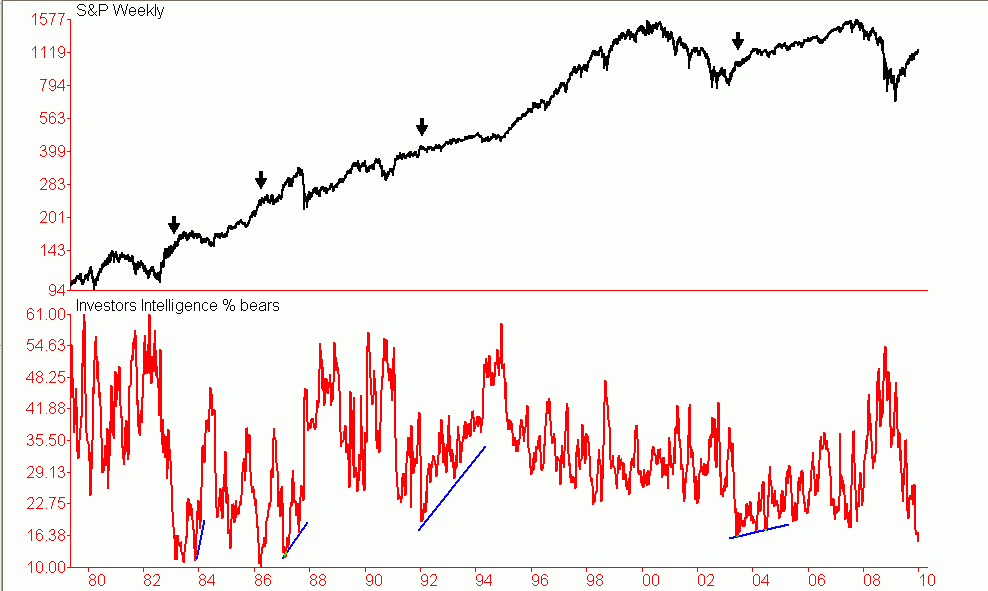
Some sentiment indicators have continued to deteriorate over the past several weeks. One in particular is the percentage of bears from Investors Intelligence. This has been below 20% for the last eight weeks and we can not help but notice the quantity of comments we have seen in regards to this development. It seems to be one of the major arguments for the bears. Granted the numbers do seem a little bearish. But taking a deeper look at this indicator on an historic basis we find there is a lot more to it than just the low numbers Since 1980 the percentage of bears from Investors Intelligence have been extremely low on four other occasions. Those were February-April 1983, March-April 1986, February 1992 and June 2003. What all four of these periods had in common was not one time did these extreme readings occur near a top. In 1983 the S&P rallied an additional 20% or so into October of that year before beginning a decent correction. The S&P did experience a couple of small corrections of about 7-8 percent in July and September of 1986 but nothing serious until August 1987. Following the 1992 experience it gained an additional 18% or so into January 1994 with barely any weakness at all. Last but not least it rallied an additional nine months from June 2003 into March 2004 gaining an additional 16.5% We have always said that sentiment is a poor timing tool and this certainly supports that view. One other thing we noticed and something we find important is at the tops following these extremely low readings we see higher levels of bears. In other words we see a divergence. The chart below shows he percentage of bears dating back to 1980. It shows the very extreme levels as discussed above and also marks the divergence seen at the peaks.
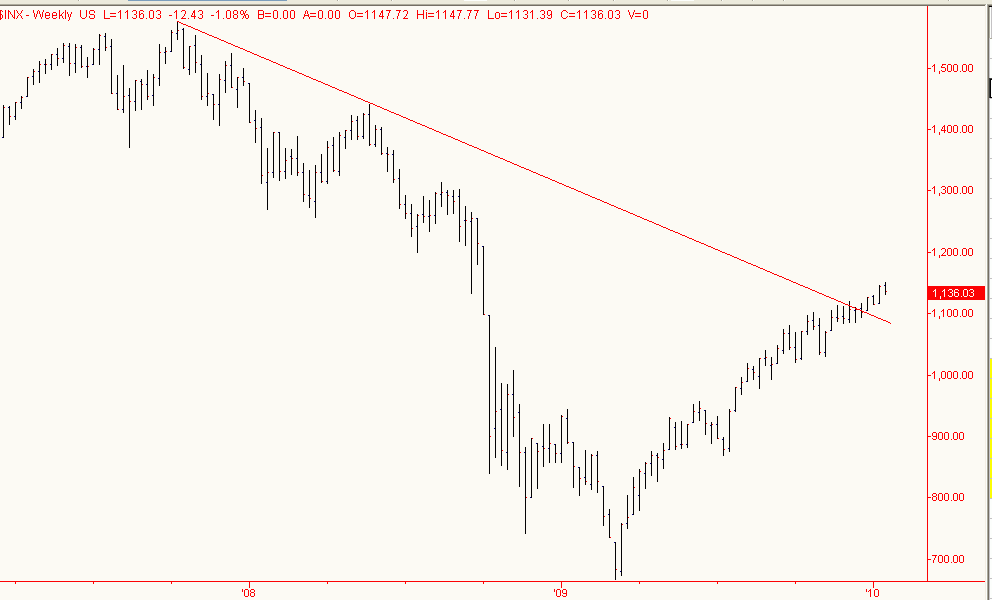
While traditional sentiment indicators have turned negative this is not the case with what we are seeing in the financial press both print and visual.. The majority of what we see and hear remains mostly bearish and what bullish comments there are subdued. We have seen little if any focus on the positives. Remember the rising trend line break in late October. You could not look anywhere without hearing about it The S&P and DJIA have broken above a declining trend lined drawn off the October 2007 and May 2008 tops yet there is very little if any mention of this. Remember the 50% retracement of the October 2007-March 2009 near 1120 how everyone was focused on it. Well the S&P moved well above that level but instead of focusing on the positive side of this we see the majority of comments focusing on where the next resistance levels are. As we can see on the char below that break above the declining trend line occurred about four weeks back but nary a word. Very few have mentioned the fact that the DJTA has broken out of a big base and has confirmed the new highs in the DJIA. Nor have we seen much in regards to the breakout of the utility stocks out of a similar base a few weeks back.
There will come a time when this will change, where we will see the majority of comments focusing on the bullish case. But what we are seeing now is added support to the medium and long-term bullish case. Short-term we do not think that the decline that began last week has run its course Our expectation is for a move towards the mid December low. We see this as only a short-term development within a still incomplete but maturing medium-term advance. We are neutral short-term and bullish medium and long-term
Go to www.marketsummaryandforecast.com to sign up for a free two week trial to all of our services


