



This is from our latest letter on July 6, 2010
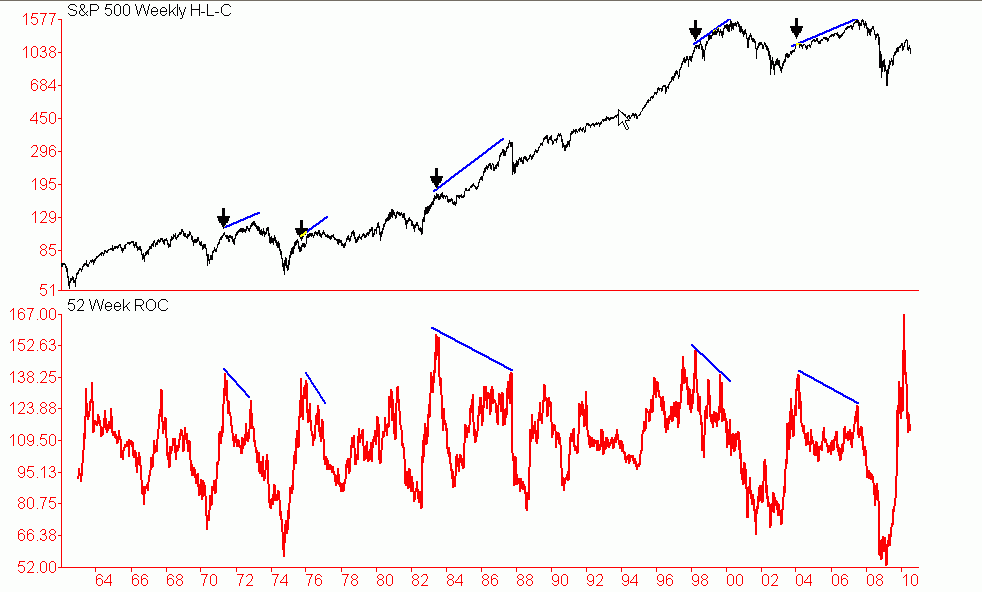
It is our opinion that the post April decline was more function of excessive sentiment rather than a weakening of the internal technical condition of the market. As we have discussed on and off over the last several months there has only been one time that we have had a bear market in the past ninety years that was not preceded by a divergence in the A/D line. This is also the case with the new highs as important market tops have not occurred when the new highs have confirmed. At the late April top the A/D line had not only not diverged but had in fact hit an all time high. We also saw confirmation from the new highs which reached their peak from the March 2009 low the day of the high in the averages. This is a strong argument on its own. But we also had a very rare and bullish momentum surge on a number of weekly based indicators that in the past were seen at the beginning of a new bull market. These indicators include the weekly McClellan oscillator and the weekly Coppock oscillator. Another important long-term momentum indicator is the 52-week rate of change.
There are two things that we think are quite important in regards to the current position of this indicator. The first as we can see on the chart above is that when it reaches very high relative levels after a severe decline it makes the beginning of a more important move to the upside. Also as can be seen on the chart it has always lead to a divergence prior to a more important peak. The shortest time frame between the initial peak and divergence was 12 months in 1975. The averages of the previous five has been just over 28 months with the longest from 1983 to 1987. The other important factor is that this surge saw the 52-week rate of change reach its highest level since 1962 after coming off its lowest level since 1962. This is an extreme surge in momentum. The fact that it occurred in about one year has very bullish long-term implications.
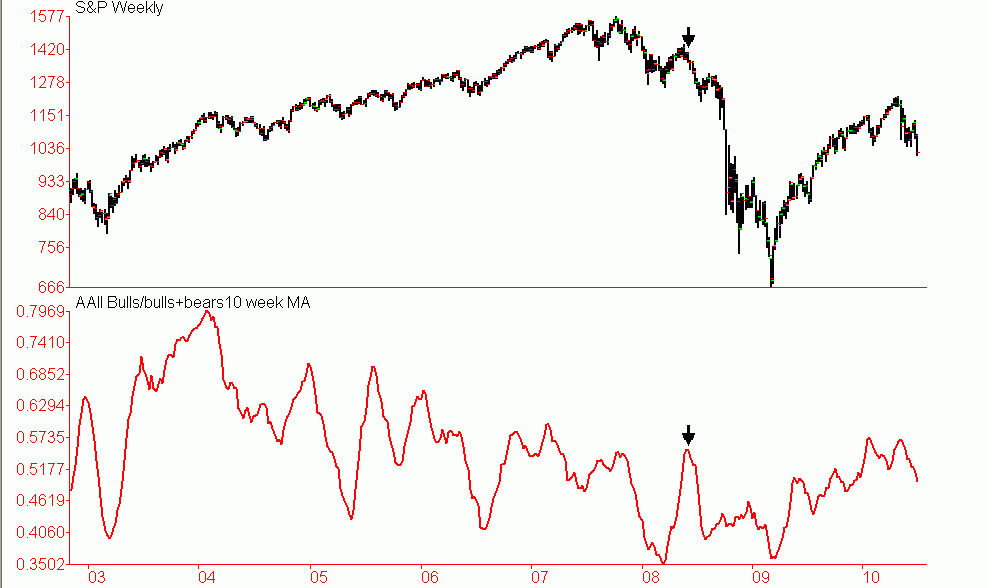
Sentiment has continued to improve over the past coupler of weeks with the extremes in some of the indictors in April having been fully corrected. Some such as the put to call ratios are back to very bullish and levels and have maintained those bullish readings for several weeks. Most of the standard weekly surveys have also improved considerably with both Consensus Inc. and Market Vane near bullish levels and Investors Intelligence now neutral. The one survey that really stands out is the American Association of Individual Investors (AAII) survey. The chart below is the 10-week moving average of the bulls divided by the bulls plus bears. Note that in spite of an 80% 13 month rally in the S&P this indicator could not even get back to where it stood in June of 2008 after a mediocre rally of less than two months. note also how high this indicator was during the 2003-2007 bull market. What this indicator is telling us is that the public has not participated much if at all during the rally. This is not consistent with important long-term tops as those tend to occur with maximum public participation.
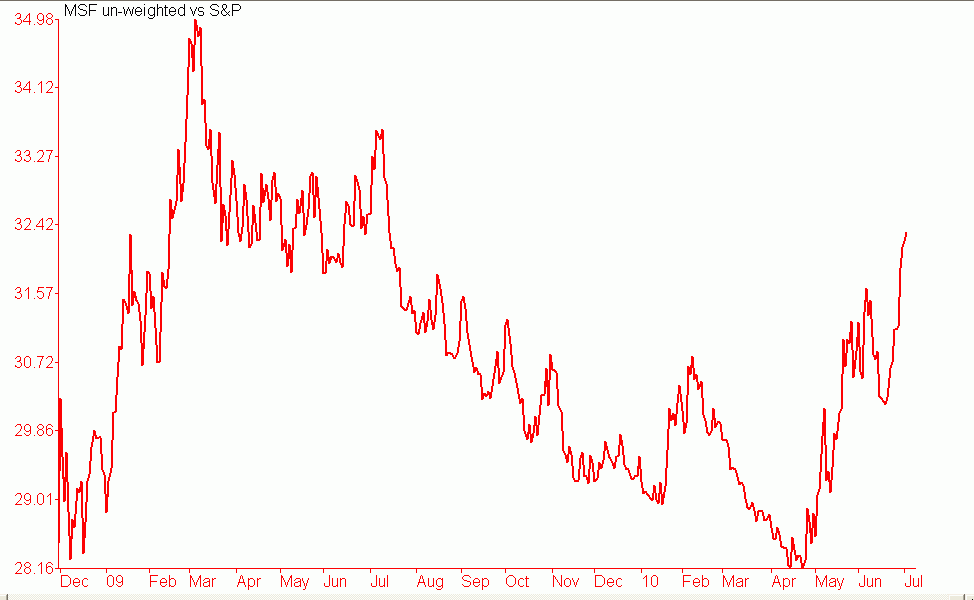
The extent of the decline has been very well publicized. It seems that the majority are just waiting to see the averages drop by 20% so that they can declare a bear market. The decline has turned the majority bearish in as short a period of time that we can remember. However, as serious as it has been in the averages the majority of stocks seem to be holding up far better than the S&P and the other averages are suggesting. The daily A/D line has barely moved below its June low while holding nearly 15,000 units above its February low. Our un-weighted price average is showing the same pattern vas it too is well above its February low while the S&P is well below its respective level. The chart below is a relative strength chart of the NYSE un-weighted price average versus the S&P. When it is rising the average stock is doing better than the S&P. Note that on a relative strength basis the average NYSE stock is well above where it was on a relative strength basis versus the S&P. In fact it is getting close to where it stood at the July 2009 low.
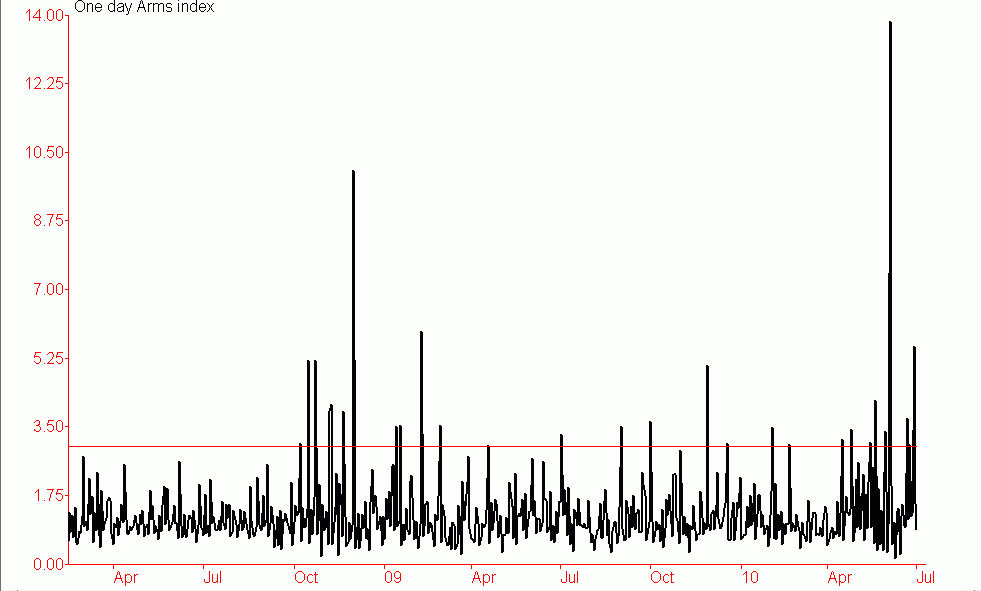
We have seen numerous instances over the past two months of climactic or panic type behavior in some of our important indicators. Some of our proprietary measures of price volatility reached their highest level since March 2009 in late May as did the VIX. Another such indicator is the Arms index. This indicator measures the relationship of volume on advancing issue to volume on declining issues. A reading of 1.00 occurs when that relationship is in balance. Readings below 1.00 occur when the volume on the advancing issues is higher in relation to volume on declining issues while readings above 1.00 indicate the opposite. One day readings that are at or near 3.00 or higher occur very rarely and are a sign of panic. It is very rare to get a cluster of readings over a very short period of time. Since the April high we have had a cluster of one day readings over 3.00 while also seeing the highest one day reading in the past 25 years.
One thing that we have noticed is that a cluster like we are seeing now tend to occur near a good low and tend to mark the internal low for the market but not the final price low. The last time we saw a cluster of readings over 3.00 occurred in the October-November 2008 period. That was followed by a sharp rally and then a lower low. This is basically what we see now but with far less dramatic results. There were two developments on Friday that point to the strong likelihood that a big short-term move is setting up. The first is that we had a minor net change on the McClellan oscillator. We also had an inside day (higher low, lower high) on all the averages but the DJIA. Each on there own as a strong history of being followed by a big short-term move. The combination of the two suggest the potential for an even bigger short-term move. Our short-term indicators have turned more favorable and are positioned for a decent rally to get started at any time. This favors the idea that the big short-term move may resolve positively. While we so see the potential for a very sharp rally we also see a lot of evidence that point to lower prices once the really runs its course. Our long-term indicators remain very bullish. We do not see the decline from late April as a continuation of the post 2007 bear market or the beginning of a new bull market but the first serious correction in a new bull market.


